
EPISODE 9 · Off “N” Racing
David Pfieffer on Training at Warwick Farm and Racing Together
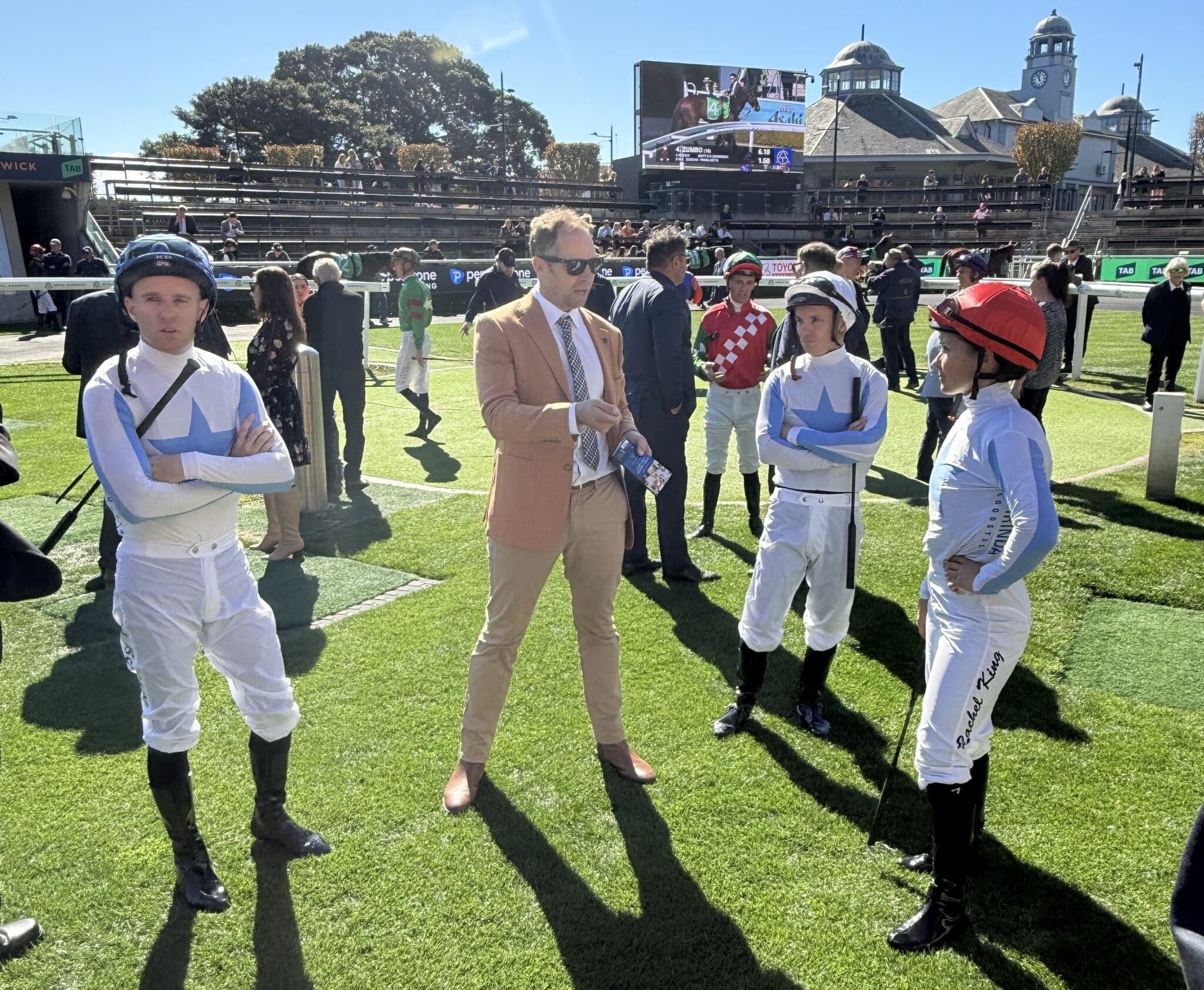
Warwick Farm trainer David Pfieffer joins George and Sean to talk about his path into training, running 33 horses and the horses he trains for Kurrinda.
23 March 2024 | 35 min | David Pfieffer
Episode 9
David Pfieffer on Training at Warwick Farm and Racing Together
Also listen to this podcast on
TL;DR
Key takeaways
- From paper boy to trainer. David has been around Warwick Farm for 25 years or more, began working afternoons in a stable at high school, then worked full-time for Tony Wildman and later took over a handful of his owners
- Every horse is an individual. David says stayers and sprinters do not need one fixed program. He treats each horse by what it can cope with, like dogs in a backyard that are not the same breed
- A stable of 33. At the time of recording David had 33 horses in work and said he was happy with 30 to 40. He says a smaller team makes it easier to give each horse individual attention
- Gelding is the trainer's call. David says a talented colt who picked up bad habits would probably have raced longer if gelded earlier. Sean and George say Kurrinda gives its trainers the power to decide on gelding
- Why people join in. David says racing adds a social side and is a hobby, like fishing or golf, and that groups of friends enjoy a Saturday at the races together
- 33
- horses in work at David's stable when recorded 30 to
- 40
- stable size David is happy with
- 25+ years
- around Warwick Farm, by David's count
- About 12 years
- his foreman Sue has been with him
Jump to
In this episode
“It just adds that social factor that people are looking for things to do. It's also another part of a hobby.”
Transcript
Full transcript
Read along or read instead of listening. Helpful if you are deaf or hard of hearing. Select a time to see where it sits on the player.
David Pfieffer guestSean Driver hostGeorge host
0:00 Back at Warwick Farm: the Castle Vecchio filly
George 0:00 We're here back at Warwick Farm, Sean. Last time we were here we bought a few yearlings but we're with Dave Pfieffer today for Episode 9 of our podcast Off N Racing. Dave, thanks for joining us, mate. Not a problem. Good to be back. We bought a nice Castle Vecchio filly last time we were here together. Yeah, nice athletic filly. Got a good presence about her. Got a good walk on her and she's very presentable, isn't she?
David Pfeiffer 0:30 The way she walks, the way she carries herself, but even to just a colour, you know, an appearance is going to get a lot of people's attention.
Sean 0:37 Real sort of not a single doubt, wasn't she? Yeah, yeah. More not a single doubt than Castle Vecchio, but it's probably got their sights, hasn't it, really?
David Pfeiffer 0:44 Yeah. Not a single doubt in Castle Vecchio, but it does look like it'll go well. Yep.
George 0:48 A lot of quality, doesn't she? She's caught a lot of people's eyes, had a lot of people inquiring and stuff, so, no, she'll be a lot of fun for anyone that gets involved in her and…
Sean 0:57 She's already at the breakers. Yeah. Yeah.
George 0:59 It'll be good fun racing her together, so looking forward to that.
David Pfeiffer 1:02 I thought we'd have a bit more for her, actually.
George 1:04 Yeah, same. Same. But, I think it was just the sale, the market, wasn't it? And it was good buying, so… Yeah, yeah. It's good for everyone getting involved. Correct. And we had a Queen's Rhapsody trial here not long, a couple of weeks ago.
David Pfeiffer 1:16 Yeah. So you think Philly, and I often expect to have two rods, or so you think on the trials, but forward, naturally forward. She's strong. She doesn't really have the so you think looks or characteristics, but it's good to get her the trials and educate her and get a good future in front.
George 1:36 Yeah, she did it well. I loved them in the trials when he gave her that little squeeze, how she accelerated straight away, like, and then hit the line well. She looks like a nice Philly, so she's pretty exciting. And Boston Rocks is half-sister, so…
Sean 1:50 And to be fair, it's only an 800 trial, like, she's gonna… I think, Dave, like we both think, she'll probably get, what, seven furlongs, won't she?
David Pfeiffer 1:57 I think that'll be a pet distance, I reckon, six, seven furlongs, so, as a 203 year old, so, once she gets beyond that, or once she gets a bit older, more mature, it'll be, you know, see her first taxes.
Sean 2:06 Yep, she's at the farm now, having a short break, and to be fair… It will be short on her. No, to be fair, she's, um, she's been fantastic. Yeah. Like, for now, things will change.
George 2:18 She usually lets us know, yeah.
Sean 2:20 But no, she's been, so, she's matured a lot since you've, like, since I've had her, through that pressure.
David Pfeiffer 2:25 She wasn't a bother on the stables. She was easy to deal with, anyone could ride up. Yep. You know, she's a professional and done a job where somebody, say, thinks that times can get a bit hot and get themselves a bit wound up unnecessarily, but her temperament's been really good.
Sean 2:36 Yeah, she's with one of our, um, other yearlings, a Philly's, and I thought, oh, we'll see how this goes. But, I mean, she's fantastic. Yeah. Yeah, it's good.
David Pfeiffer 2:45 It's good to see them mature that way. Yeah.
2:47 From paper boy to trainer at Warwick Farm
George 2:47 Yeah, it's good. And then she'll do well and come back in and we'll see how far we get next pack with her. But, um, we'll get into a bit about you, Dave. So, what was the initial interest in horses? How did you get involved in them from a young age?
David Pfeiffer 2:59 Ah, well, I've been around here, Warwick Farm for, jeez, 25 years, maybe even longer. Um, went to school in Liverpool. Um, I… I've been a…
Sean 3:12 Fredham tough mate.
George 3:13 Liverpool.
David Pfeiffer 3:14 Fredham, Fredham. Fredham really tough.
George 3:16 Fred, Fred, Fred to the bone.
David Pfeiffer 3:19 Um, I was actually the paper boy for a little while when I was in primary school. and that's how I started meeting a few people at the stables. When I got to high school, I ended up working afternoons in a stable and just sort of started root from there, really. I was with Tony Wildman years ago and then when I came out of school, I was sort of a bit lost in my way of where I was going to go, so I started working full-time for Tony and never left.
George 3:44 And why did you want to become a trainer?
Sean 3:47 What?
David Pfeiffer 3:48 I don't think I ever had the ambition to want to be a trainer. I think it's just something that fell upon me, really. I was with Tony for a long time and he got sick with cancer. I was sort of… I was forming for a couple of other trainers. I was forming for Graham Rodgersson for a while and Rod Craig for a while. And then from there, it was like, well, Tony's not going to quite come right and hit all these clients and these owners and horses and thought, well, take the opportunity while I can.
George 4:15 So you basically took over his clients in his yard now?
David Pfeiffer 4:18 Yeah, pretty much, yeah. I started off in his yard and a handful of his owners and then slowly grew up my own little establishment.
Sean 4:25 So timing was a big part of it?
David Pfeiffer 4:27 It was. I was probably… I look back at it now and I was probably a bit premature, just my age and so forth. But that sort of forced me to develop quickly and get into it a lot quicker than I thought I would.
George 4:39 That would have been a good start having that client base. And did you take over his facilities as well?
David Pfeiffer 4:45 So I was… Tony lived at Warwick Farm. He had a place there on Bull Street. The house he had probably, you know, 15 or 20 boxes and a walking machine. So I started off in his backyard. But I also got to sit at the back porch and have a chat with him every afternoon and, you know, talk about the horse and bits and pieces. It sort of kept him involved as well while he was sort of battling his illness. But it also helped me with a bit of direction and whatnot. So when he did pass, it sort of left a bit of a hole in me because you're sort of used to that atmosphere where you can have a chat and bounce ideas of each other and whatnot. So off the back of that, it sort of made you mentally think about more things yourself and take on more challenges yourself.
5:31 Mentors, and training each horse as an individual
Sean 5:31 Who were your mentors, mate, would you say, when you first started?
David Pfeiffer 5:35 I'd be mainly Tony Walden. Yeah. Yeah, there's a few people who asked a lot of questions. I would have annoyed a lot of people back in the day just asking questions.
George 5:41 Still be. Yeah, yeah.
David Pfeiffer 5:43 Keep it down, George. I'll be so happy to be on you in a minute.
Sean 5:46 And did he influence the style of trainer that you are, do you think?
David Pfeiffer 5:50 I've adopted a bit off a lot of him. And then also, too, just taken on board what other people have done, how they've managed certain horses. And there are a wide range of them, whether you've taken on training methods from babies to older horses, to just educating them. So how you manage an old horse that's got joint issues, or you're educating a young horse, or you're training horses that want a lot of work and not so much a lot of ground. So you've just got to take on all aspects and read individual horses.
George 6:23 Do you find, with them, especially with the shuttle stallions and stuff coming over all the time from America and Europe, that you constantly have to evolve how you train the horses and adapt?
David Pfeiffer 6:34 I think you've always got to be reviewing an animal like yourself, really. It's, everywhere's a little bit different. And as we touched on before with Queen's Rhapsody, you know, if you're treated like a normal so you think for this, you know, she's probably still out in the paddock. But treating her like a horse who is mentally ready, physically ready. And that's why we got to the trials of preparation. But it's just reviewing each individual and seeing what they can and can't take on.
Sean 7:00 Yeah, that's a big thing, isn't it? It's treating them as an individual.
David Pfeiffer 7:05 Yeah, it's like having dogs in your backyard. They're not the same breed.
Sean 7:11 Kids at home.
David Pfeiffer 7:12 Yeah, they've all got different personalities and they can all react to different things and food and work and regimes and schedules all differently.
Sean 7:20 And for the listeners at home, you've obviously got stayers, you've got sprinters. What's the difference in training the two, from your opinion?
David Pfeiffer 7:29 I think stayers, you obviously want to make some longer work and so forth. But even to so many stays, you don't necessarily all have to have the big long work and get miles in their legs. It's really the individual again. So, same again with sprinters. So, I'd treat, like I said to those runners, I'd treat Matt Darcy completely different to what we would an angel find when they couldn't let a race. You'd treat Windshack completely different to what we would do with them two. So, it's just treating the horses what they can cope with.
7:58 A consistent stable of 33 horses
Sean 7:58 And the stable's just flying at the moment, isn't it? Like, it's so consistent across the board.
David Pfeiffer 8:03 Yeah, it's kind of great. I'd like, you know, as you said, it's very consistent. The runners are running, if they're not winning, they're running top three. It's a real credit to the stable and the staff. And it's good for all the owners and people and existing owners and people that are getting
Sean 8:20 on board. How many, we spoke on the phone the other way, how many seconds did you have in the last 50 or something?
David Pfeiffer 8:25 I think I was getting up there earlier. I was getting about 14.
Sean 8:27 And I said, man, second, there's nothing wrong with second.
George 8:29 Oh, my daddy's still telling me you're still the first loser.
David Pfeiffer 8:33 Second's been in the third, but it's, when you sit back and review the overall scheme, but it's at least the racing world.
Sean 8:40 Yeah.
David Pfeiffer 8:41 Yeah, it's an owner.
George 8:42 But they're not racing in bad races either. Like, they're all provincial or midweek Saturday. City. So, yeah.
David Pfeiffer 8:49 But as an owner, they're racing well and they're racing consistent and they're making money. That's what it's all about, you know?
Sean 8:53 Everyone wants to win races and minimal benchmark points.
David Pfeiffer 8:56 Yeah. That's right. That's right. Sometimes you'll beat the handicap of all the places.
George 9:01 How many do you even work there?
David Pfeiffer 9:03 Ah, there's 33 there at the moment.
George 9:05 Yeah. So it's a pretty manageable number that you can figure out each horse as an individual.
David Pfeiffer 9:10 That's, you know, when you have that size, it's easier to be able to put individual efforts into each horse and so forth. And when it gets a bit bigger, it obviously means you've got a lot of staff more and having the right staff around you to be able to cope with those numbers.
George 9:24 And what would you realistically like to get up to in time?
David Pfeiffer 9:27 Oh, I'm probably happy with the 30 to 40 number. Yeah. It's a good style of the number. It's, it's, it's, you, you, you weigh it on, on the staff you've got and how you can, how you can run and manage the team. So.
Sean 9:39 And you're hands on too. Like you want to keep that, don't you?
David Pfeiffer 9:42 Well, it's, it's, it's, it's the age of the image. It's, it's, it makes it easy to do it.
Sean 9:46 In your prime, mate. In your prime, yeah.
David Pfeiffer 9:48 So, but, um, yeah, when you get bigger, it's, it's, it means you're relying on more people. You know, it's, um, since COVID, it's always been tough and how to find the right staff to get around you.
George 9:58 So. Do you think that's the conditions like to go to a Randwick or anything like that?
David Pfeiffer 10:02 Yeah. No, I don't think so. No, I think. If I went to Randwick, I've got to get myself in too much trouble, I reckon. I've done a stint at Randwick.
George 10:09 There's no point going to Rosehill. No.
David Pfeiffer 10:11 No, no, but at least I get plenty of use of course proper. Um, yeah, no, I, I had a stint at Randwick when I was formed for Rodgson and, um, yeah, let's just say I made full use of the, uh, the seal.
George 10:25 Kudji Bondi.
David Pfeiffer 10:26 The nightlife, yeah. So, but, um, anyway, that's in the past.
Sean 10:30 The second, the seconds turning to ninths and tenths.
David Pfeiffer 10:32 Yeah.
George 10:33 That was my first sale when I came over to Australia and we were staying in Kudji. I was like, this is the greatest place on earth. Why am I leaving? Yeah.
10:42 The best horses he has trained
Sean 10:42 Yeah. You've won some big races. Um, what's the best horse that you think you've trained, not the best race, but the best horse that people might or might not know? Ah.
David Pfeiffer 10:55 First good horse I had was probably Grace Flanna. Um, this is only a couple of years in my training. She won, um, uh, five of her first six starts, including a Wynor Magic Mewns and a Gold Coast Magic Mewns, a three year old. Um, she was, probably wasn't a brilliant filly, just very honest. Um, from, from year to year I managed to always pick up a really nice horse. Um, the next one is probably, uh, a horse I bought at sales, I think, um, out of a sprinting family, which I've really adored. Um, it's kind of what I thought so.
Sean 11:35 Was that the one Huey rode at Gosford?
David Pfeiffer 11:37 Yes. Yeah. Yeah. Of course, he ran off the track, he crossed off the race in Gosford Guineas. Um, I still feel that he was probably one of the better horses I put a saddle on. Um, just, just probably, probably picked up too many bad abattoirs as a colt and probably just didn't evolve as he should've.
Sean 11:53 Um. But he was a proper animal, wasn't he?
David Pfeiffer 11:55 Oh, he was a beautiful specimen. He could really gallop. He was a really nice horse and, yeah.
George 12:00 Do you think galling him earlier than what they did would have helped him?
David Pfeiffer 12:03 I think it probably would have prolonged his career. Yeah. I think he, um.
Sean 12:07 And he would have won a proper race if you? I think so, yeah.
George 12:09 How important is that, like, to get that timing right before those bad habits become permanent?
David Pfeiffer 12:15 Well, I think from that Gosford day, I think it went downhill from there. So, um, I think it just sort of slowly got worse and you can work them harder and try and get the energy levels out of them, but when you start picking up bad habits, it's, it's, they're hard to show, so.
Sean 12:29 We're big on that, aren't we? Like, we give the trainers the power to gild them or not?
George 12:35 Yeah, because at the end of the day, like, we work with them at home, but you work with them- Under pressure.
Sean 12:40 Under pressure when it matters.
George 12:41 Yeah. So, that's where, like, us having our relationships with our trainers, they've got to be strong. Well, we want race horses, don't we?
Sean 12:47 Yeah. Exactly. That's the most important thing. We want a race horse.
David Pfeiffer 12:51 Well, the level we're buying it, you know, expect to be developing stains, it'd be great if we do, but, but you've also got to take a common sense approach. Yeah.
Sean 12:58 Yeah, the level we're buying at, they're not going to have that page unless you, for some reason, get a freak out of the box. Yeah, that's right.
13:06 His first Group 1 win, the Galaxy during COVID
David Pfeiffer 13:06 And realistically, stains these days are going to be winning stakes races, two and three, not just doing it as a three year old and up, but, yeah, so here was, there was a horse that I thought probably should have performed more on track. Um, then I moved on to, uh, I'm excited. She won a group one, my first group one on Slipper Day called the Galaxy. Um, it was middle of COVID. So it was like winning a barriotrol. There was no crowd. There was nobody there.
Sean 13:32 You were there?
David Pfeiffer 13:33 I was there. Yeah. Nothing was open.
Sean 13:36 No bars were open. No one to high five or anything?
George 13:38 Well, Adrian Bott was on the last pod and then he said he hugged, um, the foreman and, yeah, and he got a Tremont banner or something. Yes.
David Pfeiffer 13:52 Really? Yeah.
Sean 13:54 Yeah. Farnham. Is that what he got it for?
George 13:57 And funny enough, I'm excited to have a Farnham this year. Yeah. It's a small little world, isn't it?
David Pfeiffer 14:04 Yeah.
Sean 14:05 So what'd you do? Like just, that would have been surreal. Oh, it was, it was weird.
David Pfeiffer 14:08 Weird. Yes, it was. It did set as well when he barriotrol.
Sean 14:13 Did you go home and drink like 20 beers or something? Well, I'll give it a note.
George 14:16 Let's just say that.
David Pfeiffer 14:18 But I walked off course, couldn't hug, couldn't shake my hands, walked off course carrying two trophies and you're like, what did we do now? It'd be quite surreal.
George 14:28 It was, it was.
Sean 14:29 Your biggest day on the track?
David Pfeiffer 14:31 Well, it wasn't that big a day.
Sean 14:33 But like.
14:34 So You Think runners and a Bellevue Girl filly
David Pfeiffer 14:34 I think we had a heap of tables booked on the day and they were cancelled because of COVID. Yeah. So, um, so that was probably one of the biggest races I won with, with credit. Yep. Um, rocking by another so you think. He, uh, he won the English three-year-old millennium and then he won the Sydney stakes. Uh, so he's been a, a really good little buy. Uh, $20,000 from the scones arm. Um, and he's been a, a, a great addition to this though as well. So.
Sean 15:02 $20,000 into what with bonuses $2.7.
David Pfeiffer 15:05 Yes.
Sean 15:06 Yep. Not, not a bad return.
George 15:08 My dream of that. So why do you think like, you've mentioned a couple of them there. So you think, why do you think your style suits those sort of horses?
David Pfeiffer 15:17 Oh, I think I identified it a few years ago. I, I like the fact of sprinting families, mares, over so you think, well, so you think over top of a mare with a sprinting page, I think it works. And I've just backed myself and I've bought a few of them and, and I've had success doing it. So, um, what change what you think works.
George 15:38 And it seems like only now he's really getting the credit in the sales ring. Yeah. For what he's doing. Well, I think he is.
David Pfeiffer 15:45 Yes and no, I agree.
Sean 15:46 He is and he's not.
David Pfeiffer 15:47 They're still producing group one horses every year. Yeah. And he's under still. And they, and he stands for a hundred thousand service fee and he's still doesn't, they're not bringing sales topics. You know, they're still viable. They're still very viable. Yeah.
George 16:01 And he's a good stallion. I don't know why. I think it's a case of it.
David Pfeiffer 16:04 You just got to wait that little bit longer for them. Yeah. We bought Queens Rhapsody.
Sean 16:07 But even on type, if she was buying something else at an Easter sale, we wouldn't have been able to buy her. No, that's right. But on type, I think she was cheap. If she had been a, uh, zoo star. Yeah. Yeah.
David Pfeiffer 16:20 A premium stallion that, which he is a premium stallion, I think, but if that had been something
George 16:21 different, probably makes double.
Sean 16:22 Yeah. I just think he's, um, and I'll say, I don't think he's respected enough for what he does. No.
George 16:35 And he's on the track, like 10 group one wins in two hemispheres.
Sean 16:40 Like he's some horse.
George 16:41 Yeah, definitely.
David Pfeiffer 16:42 Yeah.
George 16:43 And he's proven like, not just on the track, but as a broodmare sire too. Like he sire the broodmare sire of a slipper winner.
Sean 16:50 I think five, like that's the key, like for us as well. We, with the So You Thinks, having that, the damn sire with that speed injected, that's the key for, I think. Yep. I would rather have that, you know, flying spur cross, just, just like Queen's is, you know, like it's, it's a proven cross, isn't it? Yep.
George 17:09 And then we went back again at Magic Millions with the Philly this year, our Bellevue girl.
Sean 17:13 Ah, Sejin Ho.
George 17:14 Yeah. He's now retired.
Sean 17:16 But she's a, she's a different product. She's, um, she will be that three year old product, I feel. Yeah.
David Pfeiffer 17:22 Well, she, she's lovely. She's got a bit of, bit of Queen's Rhapsody appearance about her.
Sean 17:27 Yep.
David Pfeiffer 17:28 Not as, as long as the leg is like the typical So You Think style horses. So, yeah, she, she'll be really nice horse. And, and she's got that big sprinting family.
Sean 17:37 Yep. She's lovely. I was still going to few shares in her cut off few.
George 17:40 Yeah. Yeah. and she, so you think being a good broodmare sire, she offers great residual value of being half to a group two winner.
Sean 17:49 And Sejid Ho, one of the leading farms, they stayed in her as well.
George 17:52 Yeah, the leading farm for stakes winners in Australia the last five years. We've ticked a lot of boxes for her. She'll be a nice filly. It's just up to you now, Dave, not to mess her up.
Sean 18:02 She's also at the Breakers.
George 18:04 Yeah, she's been there, what, two weeks now?
Sean 18:07 Two weeks yesterday.
David Pfeiffer 18:09 Any positive reports?
Sean 18:11 He's sending videos through today. So when people watch this, it'll be late.
George 18:16 All the shares might be sold. You said, we touched earlier about you having your group moment and COVID and that. How good would be, like, how hungry would you be to get back there to have the proper feeling when there's full of crowds?
David Pfeiffer 18:35 It's all about, isn't it? Yeah. We want to be there in the big days. You want to have the runners on the big meetings and, you know, that's why we're searching and going to sales every year to try and find that next staffy stable.
Sean 18:45 That's why we get up every morning, literally.
David Pfeiffer 18:49 And that's what makes it easier to, when you've got a nice horse in the barn, it makes it easier to put your shoes on in the morning and put a tie on for the races when you're saddle up racing, horses in big races. Yeah.
19:01 Early starts and keeping good staff
George 19:01 And what time would you be up in the morning for the listeners? What's your normal day?
David Pfeiffer 19:04 Well, I've just changed the starting time, so I've tracked now to 5am, which sort of gives us a bit of relief. So right now, my phone will probably go off at about quarter to four. That gets me in there, sort of a comfortable time.
Sean 19:17 Instead of, what, quarter to three? Yeah.
David Pfeiffer 19:19 So it's a big difference, you know? Yeah. Big difference. It just helps your day a lot longer.
Sean 19:26 Especially when you've got kids as well. Yeah. It gives you that extra, oh, stay up half an hour longer.
David Pfeiffer 19:31 Yeah, that's right. Yeah. I think it's a positive move. There's a lot of people that are probably against it, but I think it's going to help the industry. It might get a bit tougher through winter because the starting time for the race will be a bit earlier, but I'm sure we'll work through it. Yeah.
George 19:45 It's just something they'll have to adapt and work around and that. Correct. Is it just getting too hard, I think, to entice people to that lifestyle, to work those hours?
Sean 19:55 Well, most have two jobs, don't they? The track work riders.
David Pfeiffer 19:59 A lot of them, they'll come in and do a few hours at stables and then go off and do a normal job for the day or just have multiple roles.
Sean 20:06 Earn their two grand riding track work and go and work 40 hours for 800. Two grand. You're being gentle. Yeah.
David Pfeiffer 20:13 You're obviously able to see a multi-roll.
Sean 20:15 But it's really good money, isn't it? Like, I know they work for it. I'm bleeding every Thursday. I know.
George 20:23 Is it hard to, like, retain good track work riders then?
David Pfeiffer 20:26 It's, I think it's just providing a good work environment and having, when you've got a small stable and you've got some quality in the stable and you've got a smaller team and everyone has that team environment. So that's probably the way I try and structure it, you know, and have some good people in there. So, you know, when it gets bigger, it's obviously harder again.
George 20:44 I've heard you've got one of the best-priced vending machines in Warwick Valley. Oh, yeah.
Sean 20:49 I've told him the story.
George 20:51 The cheapest energy drinks around. Yeah. What would you say?
Sean 20:54 Like, people just lining up and then the stable next door.
David Pfeiffer 20:57 I was just trying to entry for it. Condition-based.
Sean 21:02 Because I bought one. I said, ***, these are quite cheap. And he told me the story. It was a V-Flight. What was it? 480 or something?
George 21:09 On a Monday, there's two for five.
David Pfeiffer 21:12 I'll double dip in the X. So, also, we were cycling the Cairns as well.
George 21:17 Smart business, man. Mate, we'll just touch briefly. We won't go into too much detail. You had a bit of a stint away. Like, what did you do with your time away? And that was hard seeing the horses that you used to train performing and being there and knowing whether it was good or bad. Maybe you could have done better or you would have done something different.
David Pfeiffer 21:40 There was no doubt I could have done something better. But my brief holiday I had a couple years ago was obviously my own fault and I just had to suck it up and do it. First couple of months was tough, you know. Changed routine. Seeing all the stuff I couldn't have involvement in. But after you sort of mentally got through it all, it was good to be able to spend more time with the family. Just doing the kids. I've done a lot of fishing with the young fella. Ended up working the job, doing a bit of air conditioning. Just put that bloody useless at it. I feel sorry for the people that got air con when I was working there.
George 22:19 They're sweating right now.
Sean 22:20 The warranty claims went through the room.
George 22:24 That company's no *** done.
David Pfeiffer 22:26 But a good feeling was, you get to Friday afternoon and your week was over, your job was done and it was…
George 22:31 Monday to Friday.
David Pfeiffer 22:32 Yeah, it was quite good. You get to the weekend and you wake up at normal time. You've done stuff on the weekend with the family and probably annoyed the hell out of them. Same again, like I said, I'd done a bit of fishing and took the kids out places on Sundays and sort of had a bit more involvement and whatnot. Then I got closer to the back in the mid-time and the excitement started kicking in of getting back into training again and gathering the team back together and I was quite overwhelmed with the support I got.
George 23:00 Was it a lot of the year-old honours that came back to you? A lot of them did.
David Pfeiffer 23:05 A lot more than I thought would. But also too, I was also active at the sales and a lot more than I thought I would be. So I also picked up good numbers and yearlings and whatnot. But then also got my team back together and then not long after, we had Rocketing Bar that won the city stakes.
George 23:20 That must have been some kick when he won $1.2 million.
David Pfeiffer 23:24 It was surreal how it all just come together so quickly and you got some of the old staff together, got some new staff there and then having the support of the client backs as well was overwhelming.
George 23:38 You would have celebrated that one.
David Pfeiffer 23:40 There's a photo of me drinking champagne out of the Sydney stakes trophy. That's what you've got.
Sean 23:48 And then Yamazaki as well?
David Pfeiffer 23:50 Yeah, Yamazaki. She was a good little mare. She probably won a couple of good races but probably could have won a better stakes race. She won the silk stocking just for a good time.
George 24:02 You were flying before that, weren't you? You won the two-year-old race, was it at Scone and the Scone Cup as well? Yeah.
David Pfeiffer 24:10 I was going really good right before I got put on the sidelines but it was good to come back in and then get the team rolling so quickly. It was a big help.
Sean 24:19 And all the staff, most of them came back? A lot of them did, yeah.
David Pfeiffer 24:23 A lot of them were very eager to get back.
George 24:26 It was bad in the machine prices, of course.
24:27 His foreman Sue and the mare Denmagic
Sean 24:27 And we will mention the backbone that a lot of people probably wouldn't see is your foreman, Sue.
David Pfeiffer 24:34 Yeah, she's been with me for maybe 12 years, I reckon. So, yeah, she's the backbone of the joint. She marks the staff around and gives me time to concentrate on training schedules, programming, updates and time with clients and so forth. And I've got the confidence that she's getting the staff and the treatments bits and pieces done in the barn. Yep.
George 24:59 You've had a bit of luck with the Bell River boys, where I'm excited. And you had Den Magic as well. Yeah. She was a good mare, wasn't she? Group one first. Yeah, yeah.
David Pfeiffer 25:08 So I've just recently picked up Den Magic's one of these foals. They're a capitalist. They're a capitalist. Yeah. We also had Prophet Stump. She was a stakes winner as well for the farm. And I've still got Go Tropper on the barn. He's a Bell River horse. And obviously I'm excited. So yeah, we've had a lot of success together.
George 25:28 I sold a $1.1 million yearling. I would have Magic her first foal. Oh, yes. Yeah. I reckon you could run quicker than them though. Yeah. No, she was beautiful. She was actually one of my favourite mares on the farm. Just beautiful nature. Very good nature. Yeah, beautiful looking.
Sean 25:47 What has she done since? Has she had a…
George 25:50 No, she had…
Sean 25:52 Well, Pfeiffer would probably know more, wouldn't you?
George 25:53 She hasn't had anything really come out yet.
David Pfeiffer 25:56 No, she only had a couple of foals. But as a racehorse, she was a bit of a bridesmaid, to tell the truth. Really? She won a couple of races, but placed in a lot of stakes races. And probably unlucky not to win a group one. And I feel like underachieved with her as a racehorse. Yeah.
Sean 26:10 Due to what? Like soundness issues? Just racing pattern. Okay. Yeah.
David Pfeiffer 26:15 Didn't like wet tracks and got back. I was unlucky a lot of times. There's a lot of hard luck stories. I think she hit the front in the Queensland Guineas. She was three deep, no cover in the race. And still hit the front and just got run down late.
Sean 26:28 But beautiful in the barn.
David Pfeiffer 26:29 Yeah, just a good natured mare and loved racing. Beautiful looking. And yeah, just put everything into racing. Yeah.
26:37 Favourite races and New South Wales racing
George 26:37 What's the one race you'd love to win?
David Pfeiffer 26:40 I don't know. I probably couldn't pinpoint one. I find the Cox played a very exciting race. But there's just so many races.
Sean 26:49 We're laying queens for the Stradbro. That's what I might make.
David Pfeiffer 26:53 With the Everest and the Golden Rose and the Golden Eagle, there's so many good races around there.
Sean 26:59 Pop-ups everywhere.
David Pfeiffer 27:00 Yeah, it's just, you know, there's a prize money in New South Wales. It's just so lucrative. I don't care what race they win now. With the prize money, it's around.
Sean 27:09 I was only saying it, and I'm not being rude to South Australia, like we're going to go to the Adelaide sale. And on a Saturday at Morfittville, 27,300 for first. That's Metro. Sydney, you're racing for 82 and a half. Yeah. There's a reason this is the strongest, at least sprinting, racing in the world, isn't it?
George 27:33 But even, like, it's so competitive, whether you're in the city or not. Like, we went to Orange with Super No West.
Sean 27:41 To try and get a kill.
George 27:42 Bumped into Steffi Magnetic.
Sean 27:43 Bumped into Steffi Magnetic with Bjorn's horse. And ran second. Beat in the nose. No, but it went to Flemington next, just got beat. Unlucky, yeah. Ran second. Went to Randwick in a good race. Ran third. And just ran second in a group one. We're like, we went there for a kill. Yeah.
George 27:58 Bumped into Her and Orange.
Sean 27:59 And then Bjorn comes out and goes, no, this thing goes really good. I'm like, oh, yeah. It doesn't.
David Pfeiffer 28:05 Information will be better at acceptance.
George 28:09 It just shows you how strong the race in South Wales is. But that, as you were saying, the prize, there's no better time for people to get involved. No, that's right. That's right. Yeah.
David Pfeiffer 28:19 And I remember when I first started the prize money, it was dismal. I think it was going to an error for, I think it was 8,000 a winner or something like that. Yeah. So now it's probably doubled.
28:27 Why people enjoy racing
Sean 28:27 And if you, to our listeners, what are the reasons, why would you entice people to get involved? What do you love about it?
David Pfeiffer 28:35 It just adds that social factor that people are looking for things to do. It's also another part of a hobby. It's a lot of people like fishing. A lot of people like playing golf. A lot of people like racing. Some people can afford it all. Fishing's ball, right? So is golf.
Sean 28:51 There's no better feeling, is there? No, that's right.
David Pfeiffer 28:55 Some people love the fact that they get a pun and stuff together. They take a share and horse and they all go down to Roseville or Remick on a Saturday.
Sean 29:02 The wives can go and have their day. Yeah. Yeah.
David Pfeiffer 29:05 Or they get an opportunity to dress up themselves. Yeah.
George 29:08 Yeah, the boys that won them on the weekend when we were there, they must have been in thinking over. Jeez, they were giving it a good kick, weren't they? Remember the four lads? They all had the long hair.
Sean 29:19 It must have been what Kerry Parker's sons or grandsons are. Yeah, yeah. They were gone. They just filled the thing with them just drinking out of the coat. But that's what it's about. Exactly. Yeah. Because there's so many bad days that we have. Yep.
George 29:32 And especially a horse like him, he had 18 months off. So there's a lot of emotion put into that.
Sean 29:38 But that one good day, I think we can all agree, it is so worth it, isn't it? Oh, exactly.
David Pfeiffer 29:43 Well, it's only a midway race, but they had Darcy won on Saturday and there was at least 50 owners there. Oh, there was a few.
Sean 29:49 Mate, there was so many, it was crazy. Yeah.
David Pfeiffer 29:51 And the amount of emails I've had of saying it's one of the best days of my life and the other VR and someone has said other things they probably shouldn't say.
Sean 30:00 Should have seen the wave, but they all passed, isn't it? Oh, they just kept pulling and pulling. It was crazy, yeah.
George 30:04 It was the biggest ownership group I'd seen in the day. Yeah, yeah.
David Pfeiffer 30:07 But it's just so good just seeing so many people that were touched on a win and so many people being there and involved in it on the day. So it's a great job. On a Saturday.
George 30:15 Well, we get so surprised sometimes that some owners, they just never go racing. Yeah. That's the thrill of it.
Sean 30:23 Yeah, they're just happy sitting at home.
George 30:26 To get there.
Sean 30:27 Especially on the big days, like what was there, two or three group ones, two or three stakes, they're the days.
David Pfeiffer 30:32 Well, that probably helps. You know, when people are going around in these, let's say, midway race, but they get the opportunity to be going to racing on a group one day and enjoying the whole day.
George 30:42 Seeing your storm by. Win or lose.
Sean 30:44 It's a good day. Yeah. No, it is.
30:47 The hardest part of being a trainer
George 30:47 It's about the experience. You've got to get amongst it and that's the best part of it. What would you reckon, mate, would be the hardest part about being a trainer, in your opinion?
David Pfeiffer 30:56 Oh, there's a lot of ups and downs. Yeah, a lot of them.
Sean 30:59 Taking George's calls.
George 31:00 He only abuses me over my son.
David Pfeiffer 31:05 Yeah, what son did? Yeah, exactly. Heard the lips.
Sean 31:08 He sees the number, he's like, ***. Mr. White, red apple rings and coconut oil. He's always into, to our listeners, Fyfe is always into George about how white he is.
David Pfeiffer 31:22 Yeah, white.
George 31:23 Keep springing up coffee out there. No.
David Pfeiffer 31:25 I wish I'd call him Casper. But no, there's a lot of ups and downs and sometimes you can mentally strain and you've just got to be able to get through it and get over it and move on. Whether it's getting beaten a big day or a horse performed poorly or something breaks down and there's a lot of hard calls being made, there's a lot of hard phone calls that's got to be made but there's also a lot of good ones.
Sean 31:50 And just the relentless, it's just, it's 24-7. Yep. That's what I probably find and we only deal with, you know, spellers but like your, you know, your horses are under pressure under, you know, in the work. It is, and so much *** can go wrong. Yep.
David Pfeiffer 32:09 Racing's on top, yeah. Yep. Yep.
George 32:12 But even like you have everything, every box ticked, the horse is flying, you think it's all going to go well and like so many little things can go wrong like how they run the race. It might have a downpour of rain and they might come off the fence and you think you've a perfect barrier. Yeah. Just so many little things.
David Pfeiffer 32:30 Small little things, yeah. Yeah. Track bias or miss the key. Oh, hit us Saturday. You know,
Sean 32:35 like even you expect a tempo and then if there's no tempo and your horse needs, it's all those little things. it's like, well, you know, there's no chance then. Yeah. But what, well, I think what's important is still remembering that and especially that the owners need to still remember that we still have families away from racing. Like, that's, yes, our life, but you've still got to go home to the wife and kids and be a dad. You've got to be a separator sometimes.
George 33:04 You're just a normal person at the end, just like them. Yeah. Yeah. So how do you escape from that then, Dave, if you've had a bad day or that like, or if you actually managed to get a bit of time off? You're still doing a bit of fishing or you've given up the air contact?
Sean 33:20 Mute your calls. No,
David Pfeiffer 33:23 I've been fishing for a while actually. So, I suppose once you get home you've just got to learn to switch your brain off and muck around the kids and yeah, try to enjoy a beer and just mentally get over it and move on to the next day. Yeah. Yeah,
Sean 33:40 you can't, yeah, you can't broadcast it. You just got, you have to just put it aside and move on. Yeah. Yeah, well,
33:47 Wrapping up and where to follow the podcast
George 33:47 I think that's pretty much it. Yeah. Hey guys, so how do people,
Sean 33:51 followers or whatever? Yeah, follow,
George 33:54 we're on Spotify, YouTube, all the platforms, follow, subscribe, share it with your friends and yeah, get everyone involved and and guys,
Sean 34:03 if we do have shares available in the Castle Vecchio Philly or the So You Think Philly, if we do, once this comes out, get involved, give Dave a ring if you want to ask about the Philly or give George a ring, doesn't matter who you call, we'll tell you all about them but really nice horses but different, the Castle Vecchio I think will be quite sharp and quite early and I think the So You Think will probably be that later two-year-old type, three-year-old and so on so yeah, give the boys a call. Yeah. Thanks for coming in, man. Beautiful, thanks guys. All good? Good. Do we meet?
This transcript was generated automatically and may contain errors. The full text is in the page HTML on load.


