
EPISODE 7 · Off “N” Racing
Adrian Bott on Training with Gai Waterhouse at Randwick
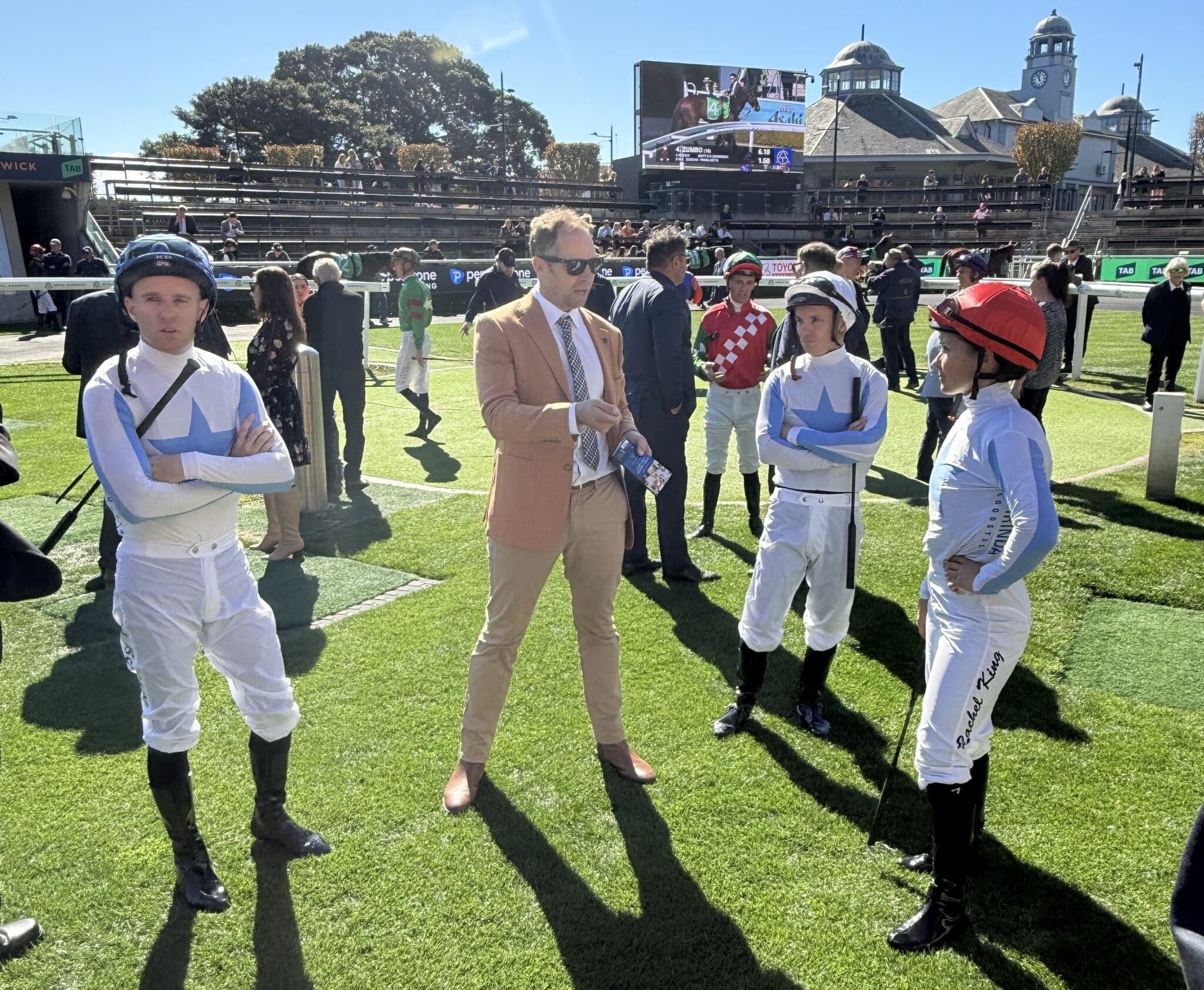
Recorded at the Inglis Classic Sale, Sean talks to trainer Adrian Bott about his path to Gai Waterhouse's stable, two-year-olds and a day at Randwick.
19 February 2024 | 53 min | Adrian Bott
Episode 7
Adrian Bott on Training with Gai Waterhouse at Randwick
Also listen to this podcast on
TL;DR
Key takeaways
- A new partnership. Sean says Kurrinda has two yearling colts going to Adrian Bott and Gai Waterhouse, and that one is already at the breakers
- Early-maturing types. Adrian says the shared focus is on horses that can be educated early and reach the races early
- Mind as well as body. Adrian says that beyond physical makeup, constitution, mental capacity for work and appetite matter, and that some of these are hard to see at a sale
- From steward to trainer. Adrian says he worked a year as a steward, did a Flying Start program, joined Gai Waterhouse's stable and was offered a training partnership after about four years
- A long working day. He says he watches every horse work from the tower from 5am to 9am, with 100 to 130 horses in work across two states
- 100-130
- horses in work, across two states
- 5am
- when Adrian is in the tower watching every horse work
- 4
- years with the stable before the partnership offer
- 7
- Group 1 wins Adrian recalls for Alligator Blood
Jump to
In this episode
“I tried to make myself very valuable throughout the business. I treated it like my own from the day that I arrived there.”
Transcript
Full transcript
Read along or read instead of listening. Helpful if you are deaf or hard of hearing. Select a time to see where it sits on the player.
Adrian Bott guestSean Driver host
0:00 At the Inglis Classic Sale
Sean 0:00 Welcome to Episode 8, Kurrinda Bloodstocks Off N Racing. We're here at the Inglis Classic Sale. We've been doing the rounds today and we've been kindly joined by Adrian Bott. Adrian, thanks for coming, mate.
Adrian Bott 0:15 Thank you. Thank you for having me on the show.
Sean 0:16 Yeah, no, it's great to have you on. Obviously, we've just started a new relationship together and you're going to train a couple of yearlings for us and we're pretty excited about it, aren't we? Very excited. Yeah, we've got a microphone and a Russian Revolution both Colts. Microphone's already at the breakers and we'll head down to again, Adrian's the pre-trainer and the Russian Revolution Colt on the 26th. He'll go in.
0:39 Buying early-maturing types
Adrian Bott 0:39 Yeah, exciting. Yeah, I think the system worked really well for us for the first time. Obviously, our first sales sort of working together and, you know, landing on the same type. So I think that's, I think that's sort of crucial trying to, you know, achieve the results that we, you know, where we want to be, what we want to get and, yeah, I think we've focused on those early maturing types, those horses that can be educated early and through the training system early. We want to get them to the races early, you know, quicker return for your owners. It's where big prize money is. It'd be great to get back to the Magic Millions. You know, slipper Colts turns as sort of Colts and values. That's, you know, that's lottery numbers for owners, isn't it? The dream, yeah. Yeah, it's the dream. You know, we want to put ourselves in that picture and that winning position and going to those early sales and trying to pick those sort of types, you know, from our perspective is, you know, giving you a greater chance in putting yourself in that picture. So, yeah, can't wait to get our hands on them in training. It's, it's good fun that early part of the education.
Sean 1:42 Yeah. Yeah. And we're keen and as well, obviously you've got a great system with all of the fantastic results you guys have. And we're keen to be a part of that and see what makes the Waterhouse partnership, what makes it so special and how you churn out those results.
1:57 Learning from Gai Waterhouse and TJ Smith
Adrian Bott 1:57 I've been pretty lucky, you know, I've been learning and mentored by the best in the game, you know, in Gay Waterhouse. And yeah, she learned from the best trainer that Australia's ever seen, her father, TJ Smith. And, you know, each, each one of those trainers have been renowned for, for the two year olds. You know, the number of golden slipper wins between Gay and her father's, you know, incredible. Yeah. The Tullic Lodge, the stable itself has produced a phenomenal amount. So yeah.
Sean 2:27 Yeah. They've got their statues and that. Right. Yeah. It's incredible. I think what's important though is like, even though like, cause we're about those precocious two year olds as well. And yourself and Gay obviously just get results left, right and centre with the two year olds. But it's really important to point out that it's not just about the two year olds. Like your results are all over the park, aren't they?
Adrian Bott 2:47 Yeah. Well, you know, I don't want to be pigeonholed as just a two year old trainer. I think, you know, the two year old education and that part of their, I guess, early careers, I think lays the foundations for the success in the three and four year old, you know, further careers as well. So it's not just in isolation, their two year old careers, but yeah, to your point, you know, as a trainer, we want to be represented in, there's a lot of races out there. There's a lot of prize money out there. Two year old, certainly one small aspect of it. There's guineas and oaks and derbies. Pop-up races everywhere. Pop-ups everywhere. Like you said. So, you know, we want to have a very well rounded and well diverse stable. So yeah, we do buy, we do buy stain sort of types of horses. We've got horses from overseas. We've got, yeah, colts, fillies. We've got those middle distance types. So yeah, I want to try and sort of tweak our skills in every single little sort of section of that and be represented in each of those sort of races and depart. You know, we go to a carnival day on spring or autumn, Sydney, Melbourne, you know, you hate sitting on the sidelines and seeing, you know, some good racing go by and you're watching from the sidelines. So you want to be well represented across all levels.
4:01 Alligator Blood and what makes a champion
Sean 4:01 Yeah, no, definitely. And I just love like horses like Hawaii Five-0 or Alligator Blood, like these horses that you've got and you have improved them. Like your system, not being disrespectful to their old systems, but it's a fact they have just found another leg.
Adrian Bott 4:16 Yeah, they've been phenomenal horses. You know, we're so, you know, privileged to be in that sort of position, particularly the horse like Alligator Blood. He's changed so many things for us. Like, you know, yeah, that's the best horse in my short career that being able to come across, you know, for us, I think it was seven group ones he was able to win. So in a short period. So for one horse to do that, they're so incredibly hard to come across.
Sean 4:41 And such a recognised horse with the Australian public.
Adrian Bott 4:45 I didn't like, obviously respected the horse and his talents so much, but I just didn't realise the following until he came into the yard. Yeah, he came into the yard and then, you know, like, after he won his first race and, you know, it's just phenomenal. The people that did recognise and associate us with him all of a sudden, you know, just the general public or, you know, all of a sudden you'd be, you know, how's Alligator Blood? And all anyone ever wanted to know about was Alligator Blood.
Sean 5:09 Yeah, yeah, yeah.
Adrian Bott 5:10 It was, it was so touching. It was great. You know, I hope we can, you know, I hope we can find another one like him together, you know, and they're out there. Yeah, yeah. Those champions are there to come through and, you know, they can come from any sale at any price, any breed. Yeah, that's the beauty of the game, isn't it? So it keeps us all going.
Sean 5:27 I don't think if we found an Alligator Blood, our partners would see too much of us. One thing I guess for our listeners, what defines like, you've got the good horses, the Saturday horses, and then obviously your state, group three level horses. What's the difference with an Alligator Blood, in your opinion, for our listeners? Like, what makes him so good?
Adrian Bott 5:48 Yeah, it's probably a few of those aspects that you, you know, can't physically see at a sale, I guess, you know, that you're trying to read into a bit. Like, obviously, they've got to have all the physical attributes, I think, to do it. You know, they've got to have that sort of makeup that we sort of like to see in the horses. But yeah, their constitution, you know, their mental capacity for the work, you know, to cope with the level of work that you can give them, to have that great appetite, go home, eat up, you know, that willingness to, you know, and desire to keep winning, you know, Alligator Blood was just mentally, I think, one of the toughest horses that we had.
Sean 6:24 Yeah, the will to win.
Adrian Bott 6:25 The will to win, you know, and, you know, that's probably sometimes a bit hard to predict and see what's…
Sean 6:31 That's what keeps us all in the jog. Yeah, what's on the inside there. To find that, isn't it? Yeah.
Adrian Bott 6:35 How big that heart is or, you know, that's without even sort of talking about some cardiovascular, you know, how big is their set of lungs or, you know, like you said, how big is their heart and producing and, you know, all those sort of types of things that you sort of can't, you know, technically measure. But, you know, they're probably what do separate the, ultimately the champions and you hope that, you know, the stallions are passing the best of those sort of traits on in their genes. But if, I feel if we can produce a nice, or pick a nice physically strong and sound mature horse that's going to stand up to the racing, a horse that's got a very good mental attitude and capacity towards work. And I think you can get a good gauge on that throughout the sale, how they handle that, their attitude towards it. You know, that you want, we want to have good doers that can handle the work, but every time we, you know, throw them something, they sort of step up and keep stepping up and building. And, you know, a horse that can, I feel that, as I said, can stand up to it, that we can then get physically fitter and stronger than the competition and then hopefully they can sort of take care of the rest.
7:48 Temperament, constitution and Bart Cummings
Sean 7:48 Yep. And would you say, so you guys trained Farnan, for example, you're going around inspecting his yearlands and everything this year. Would you say some of those traits are in the yearlands?
Adrian Bott 8:00 Oh, definitely. You know, he was a real professional in himself the early days and I thought I saw a lot of that consistently sort of across the horses. And that's obviously a trait high up for us. And, you know, that's why a number of them sort of made the short list. First and foremost, they looked athletic types, but just the way that they operated and the way that they approached, you know, their…
Sean 8:26 Temperable wise. Yeah, exactly.
Adrian Bott 8:28 You know, I think as much as you can read into that throughout the sale, throughout their careers, you know, any sort of insight, you can sort of get to them at home and seeing them in and around.
Sean 8:39 Because they've got to work with you, don't they? They want to…they have to work with you. That's the big thing.
Adrian Bott 8:43 More and more you see the examples of horses that may have all their talent in the world. Could be the fastest horse over certain, you know, distance in his track work, whatever. You could say, I've got no horse faster than that, but, you know, he wants to try and run the whole race at that speed. Or he just, you know, he just cannot handle it. Or he'll only give you that in the mornings and not… In other times, you know, like you see so many different…
Sean 9:06 Four and far left.
Adrian Bott 9:07 Yeah, you see so many different examples time and time again where the…where the horse that's not working with the horse the horse that's not applying himself, the horse that doesn't have that will to win, the horse that doesn't have the relaxed temperament or the right attitude for the work… Constitution, there's so many aspects. I can't stress the importance of that in their work and being able to get them from, you know, the average level to, you know, the above average and the elite level. I think that's what separates them.
Sean 9:36 I remember, like, back in, this is going back a long time, in 2005, we dead-heated with a Bart Cummings horse in Newcastle Cup called High C. We had Kirill Boy and we had lunch with Bart and he said, the more they eat, the harder I work them. And it's as simple as that. He goes, just keep it simple. The more they eat, the harder I work them.
Adrian Bott 9:55 And you can get a horse then that's physically fitter and stronger to take them on. So, yes, the physical makeup of the horse and the abilities there, but, you know, also that, you know, environment makes up such a big factor. So the fact that he can sort of pour that more work into them, work them a bit harder, you know, that lifts them to that next level. That extra 2%, isn't it? You need a horse that can cope with all that, cope with those pressures, go home, eat, sleep, you know, do it all again.
Sean 10:22 Yep. A bit like us, eh, when we get home. Yeah. And we're 10 days at the sales.
Adrian Bott 10:28 You need a pretty good constitution with the magic means. Yeah, definitely. It's a bit of a marathon.
Sean 10:35 Kebabs and Jack Daniels.
Adrian Bott 10:36 We'll do it all again here at Classics.
10:39 Racing over breeding, and a year as a steward
Sean 10:39 But it's a work trip, Adrian. It's a work trip. Going back to the start, mate, for you, your family have a rich history in the breeding side of it. Your dad and your brother are on the farm at Evangreen. How come you decided to go down a slightly different route to become a trainer?
Adrian Bott 10:57 Yeah, I guess, you know, it was just always racing at what really interests me. I've always followed the form very closely. You know, I enjoyed, you know, it was bedding as a younger kid that sort of probably got me interested more so in the racing than the breeding side of things. I guess it was just a, you know, a lot more happening, a bit more fast pace. Yeah, a bit more excitement.
Sean 11:19 Yeah, exactly.
Adrian Bott 11:20 I think I needed that. That's probably a little bit more my sort of personality. Like, I, you know, I'd prefer to pick up a form guide than a sale catalogue as a young guy. Or, you know, I'd prefer to look at, yeah, the race results than pedigree results, you know, or nicks or matings, you know. And that didn't interest me until I needed to understand why the breed was relevant to, you know, racing and performance. Yeah, that's when all of a sudden, you know, I became interested in breeding and, you know, everything that, you know, I learnt growing up sort of was a benefit to me. So it was all revolved around racing, placement, how to get a horse fit, how to place it right, you know. As I said, you know, it was probably betting originally as a young guy that got me, you know, interested in that whole journey of trying to work out, you know, how do I get a horse from, you know, paddock to peak condition to winning, you know, the biggest races.
Sean 12:12 And so, like, you want to be a trainer, how did you start, like, where did you begin?
Adrian Bott 12:20 Yeah, I was probably, you know, a little bit sort of lost about how to make the sort of first steps into sort of racing or what was the right path or, you know, what was going to work for me. You know, I started out working as a steward. I did a year with Racing NSW and that was purely, I think, just timing and, you know, I came out of university, just saw an advert and I thought, hey, look, this is, you know, this is a start in racing, you know. I can get in, get my foot in the door, understand racing, obviously, from a different side of the fence. But, you know, I learnt a lot about, you know, you're watching races every day, you're watching it so closely, you're watching, you know, multiple replays of the same race, you know, 10, 20 times a day, you know, in the stewards room afterwards, you know, days after that. So, I knew every single horse in Sydney at that time, you know, off the back of my hand without sort of having to go through the form, right? I knew what horse had done what, where they had drove, because you're just following everything so closely. You see a lot of things and, yeah.
Sean 13:18 Does some of that help you now? Like a little bit?
Adrian Bott 13:20 Yeah, I think definitely, you know, like I was taking a lot in and, you know, learnt to read races at the time and, you know, how to, yeah, there was a lot of, I guess not necessarily race strategy, but you just understand how things were sort of expected to be, how they should be, how they played out and maybe why they played out that way. So, there was a lot of understanding.
Sean 13:39 Yep. If a certain horse didn't perform, why did it? Yeah, yeah. Did it get caught three wide, no cover, like those sort of things? Yeah, definitely.
Adrian Bott 13:46 Yeah. I think it all helped. So I did a year of that with the stewards. As I said, it was sort of different side of things. Learned that aspect. That's when the opportunity came up to apply for the Dali Flying Start, which I was able to get accepted and, you know, jumped out with both hands. And that gave me a great aspect of everything in the industry. You know, not to mention seeing the best practices in the world. You know, breeding through England, Ireland, America. I do a stint in Hong Kong. And then obviously here in Australia. And you get to do placements. So I worked at various yards around the, training yards around the world, various studs. And it just opened your eyes. You know, it just absolutely gave me, you know, coming back to Australia, it's gave me such confidence to go, you know what, this is the path that I want to do. This is the area I want to go. Yep. And I feel really good about trying to chase that now. Yeah. So that's what I was able to do. Bruce Slade is a great friend, works closely with us as well. He was racing manager for Gay at the time, contacted him. Yeah.
Sean 14:50 Just a cold call?
14:52 Joining Gai Waterhouse's stable
Adrian Bott 14:52 No, James Harren put me in contact. I sort of went to him. I think he might have been over in Ireland at the time. And when I was there, I was like, you know, what do you recommend? He said, you need to go to Gay's. Actually, he knows Bruce well. He'll have a chat to him. And just said, yep, give Bruce a call.
Sean 15:07 And did you think, like when he said you need to go to Gay's, like, because most trainers starting out start small or in the country or something. You're like, how am I going to approach this one, the biggest trainer in the country? I'm not going to go to Orange. Let's just go to Redwick. I'm going to the top.
Adrian Bott 15:22 Why not? You know, you've got to think big picture with everything.
Sean 15:25 Yeah.
Adrian Bott 15:26 And yeah, contacted Bruce and Bruce said, you know what, there's an opening, you know, you start XYZ. You know, got there and it just went from there. And that was an assistant racing manager position at the time. Worked in the yards, you know, sort of full time with the racing manager role and just learnt, tried to learn every aspect of the operation from the ground up.
Sean 15:47 Media. Yep. Everything. Everything from the ground up. I got sent to NIDA.
Adrian Bott 15:51 You know, Gay says it to it all, you know.
Sean 15:54 Went to the stylist.
Adrian Bott 15:55 You know, you know.
Sean 15:56 That's really good though, yeah.
Adrian Bott 15:57 I'll be asking him for his money back.
Sean 15:59 My Gay talks. Yeah.
Adrian Bott 16:01 It was a while back, you know. Maybe I need to redo her. But, you know, that's, you know, when everyone says put the gay polish on you, like, it's a lot of those sort of different various things how to pretend yourself.
Sean 16:13 Why is that so important to her, for her business?
Adrian Bott 16:16 Well, you know, everyone's there representing her and representing the business and the brand.
Sean 16:21 The owners, yep.
Adrian Bott 16:22 And we're dealing with, you know, a lot of people have been very successful in their own right, in their own businesses. And people want to deal with successful people and the people at the top of their game. And we've got to, you know, if we want to, you know, be at the top of the game, we've got to, you know, I guess, sort of have that mindset. Yeah. And present ourselves in that way, act that way, and be that way. So, yeah, always been pretty sort of strict on that and like to think that's certainly what we continue to sort of try and uphold. And, yeah, with, and particularly with all the team we have around us. So, yeah, worked the ground up, learnt the operation and just over the years, positions and I was able just to continually sort of take, Yeah, just when the opportunities came, yep, I'll do that, I'll do that. And sort of kept growing in the role until eventually. And it all happened very quickly, I must say. I think I was there four years and I got offered the opportunity to go and train in partnership with Gay. So, that's when we, then we kicked that off. That might have been seven, seven, eight years ago now. Yeah.
17:26 Becoming a training partner
Sean 17:26 Yeah. And what do you think she saw in you compared to everyone else that worked there that this is the guy I'm going to partner with?
Adrian Bott 17:35 Look, no doubt, you know, look, timing, no doubt that's a big factor. You know, at the time of Gay's career where I joined the operation, yeah, that was, yeah, that was just things falling into place. You know, I can't say if I started working for Gay, you know, five years into her training career that would be in partnership after four years.
Sean 17:57 Yeah.
Adrian Bott 17:58 So, yeah, that was probably a bit of luck on my side. But look, as I said, I tried to make myself very valuable throughout the business. I treated it like my own from the day that I arrived there. I learned all aspects. I just wanted to, you know, I lived and breathed that operation.
Sean 18:15 Still do.
Adrian Bott 18:16 But yeah, you know, it's like when I arrived there, it's how I felt, you know, as if I was always going to be. You just know it's right.
Sean 18:24 Yeah. It's just that feeling. This is where I belong.
Adrian Bott 18:27 When I sort of go to some places, like I commit, you know, and I commit to making it work and I just do whatever it takes to make it work. So that's what I was sort of like when I was traveling, I was originally going to look for, you know, I wanted to do it. I love my time overseas. I loved learning and I wanted to go do another year in America with a trainer. Yeah.
Sean 18:49 Because you spent a bit of time with Wesley Ward. Yeah.
Adrian Bott 18:52 A bit of time with Wesley Ward, but only brief, you know, like you're doing six weeks stints here and there. I was like, you know, I want to go to six months, 12 months, you know, with a Bob Baffert or anyone in America or, you know, just, I thought America was just very intriguing. The racing very different, but, you know, still plenty to learn. But that was, I was trying to put a few feelings out when the offer came up for Gay. I thought, look, if I go overseas, when I go back to Australia, you know, I know I'm going to commit to a spot and I'll be there for good. So, you know, that'll rule out any other chance to sort of go and see the world and, you know, experience more. It's like, well, you know, opportunity to work with Gay, you know, I'm not going to turn that down. So I'll jump with that with both hands. And yeah, here we are, you know, committed and, you know, we're pushing forward and, you know, hopefully, Yeah, hopefully, hopefully still a few more to go.
Sean 19:39 Was it daunting going in at the start?
Adrian Bott 19:42 Yeah. Yeah. Yeah. Well and truly. Yeah. That was the biggest thing. Because it happened so quickly. It wasn't, you know, it was only four years in and when Gay recommended, I think I stalled for, I was just stalled for like 12 months just getting the license. She's like, you know, Gay, get your license. Oh yeah.
Sean 19:57 Yeah.
Adrian Bott 19:58 Have you got your license yet? I was like, um, yeah, just waiting on it. Yeah. Yeah. I just wanted to, it's, yeah, it was, how was, how was it going to be perceived from everyone? Like you said, I was certainly always just happy to be in the background working away and I certainly very much was.
Sean 20:18 Did you feel pressure?
Adrian Bott 20:19 That's it. You know, pressure, of course, you know, Gay's achieved what she has.
Sean 20:23 Yeah.
Adrian Bott 20:24 Obviously the whole history of the stable and then all of a sudden someone's just being pulled out of the background and just thrown into the front centre of it.
Sean 20:31 It's interesting to think of that side of it, isn't it? Yeah. Yeah.
Adrian Bott 20:34 I was like, this is very daunting. What if it doesn't work? What if, you know, it can't train or whatever, you know?
Sean 20:39 It would have been the time like Pierre or Joyce and that were around, would it?
Adrian Bott 20:42 At the, it was probably, uh, they were there when I was first arrived. So it was about four years after that. We didn't quite have the headline horses at the time. Uh, but yeah, it was, how was it going to be perceived? A lot of people saw it as Gay's, you know, major step towards retirement. Yeah. Oh, you know, Gay will be there for 12 months and that'll be, you know, that'll be that done. And yeah, it was a much bigger picture, um, strategy than, than that. And as I said, Gay's still got, Gay will be kicking on for many years to come, you know? Yeah. And we'll be kicking on together. It's a great partnership. We work well. And getting back to why did you, she maybe sort of choose me to go into partnership. We, we work very well together, you know? Um, yeah. And that's a big thing in, in, in partnerships. You, you know, you gotta make it work. And, and, and training, training, horse racing, the industry probably is such a, you know, an opinionated, uh,
Sean 21:36 Would you clash much? Uh, not much, no. Ever have disagreements? I would always have, yeah. But that's, that's a good, you know, it's a natural way, isn't it? Yeah, we do. You're always gonna be there. Yeah, yeah, yeah, yeah.
Adrian Bott 21:48 Looking at the horses. And you, you, you wanna have, I'll call it, I'll call it discussion. You wanna have discussion, you know? Um, yeah. If, as long as you're talking proactively about, you know, those points or discussions, and, you know, um, and, and you gain something out of it, you know, there's usually a better outcome for being able to discuss it, not just saying, no. You're wrong.
Sean 22:07 Decision made, yeah.
Adrian Bott 22:08 You know, like, everyone's gotta have an open mind, and I think we both approach it that way, or what are you thinking, what about that? Why do you do it this way?
Sean 22:14 Yeah, yeah.
Adrian Bott 22:15 And usually we both come around and go, oh yeah, I see your point, you know, like, Yeah. That makes perfect sense. Yeah, yeah, no, you're right. Let's, let's go that way. That's perfect way to go, you know? Yeah, yeah.
Sean 22:24 Um, yeah.
Adrian Bott 22:25 And, and I think sometimes, yeah, being able to discuss that where other people may not have been thinking, it just helps open your mind, and, and Gay's always been very open-minded in that way, you know? She's always, um, every year, her and her father, they always travel, you know? They, you know, they're on your holiday. It wasn't just a go line the beach holiday. It was always, you know, they were over in America, they were in England, they're in, you know?
Sean 22:46 Learning, learning, learning.
Adrian Bott 22:47 Yeah, always learning, you know? Whatever people that they could meet, learn, what could they sort of bring back? Yeah. And, you know, she's always had a very open mind to her approach to training and people, and, you know, so it's, you know, that's probably been one of her greatest strengths and what's remained able to, for her to remain at the top, you know? Like, if you look at her career for however many years she's been, decades she's been training for, I would say it's fairly consistent of where she's kept herself and maintained, you know?
Sean 23:14 Oh, 100%. Yeah.
23:16 Staying on top and the stable team
Adrian Bott 23:16 It's very hard to maintain at the top, at that level, for that long. And that's one of the amazing things that, you know, she blows me away with every year, is that that foot is never off the pedal.
Sean 23:29 Yeah.
Adrian Bott 23:30 Like, never, like, satisfied, but it's sort of like, alright, well, you know, how are you sort of going to raise the bar or keep the pressure on? It's not like, oh, we've had a great year with the two-year-olds this year. You know, we can just sit back and, you know, don't worry about buying much this year or next year. Yeah, yeah.
Sean 23:47 It's like, no. Where's our next storm boy?
Adrian Bott 23:49 Where's our next- Pressure on. Yeah. You know, you need to be like, alright, you know, capitalise on this. And it's like, you put yourself back under pressure again and keep the foot on. Yeah. And it's just always on.
Sean 23:59 And that's, that's a bit the industry.
Adrian Bott 24:00 You need to be, because the minute you take it off, you can quickly-
Sean 24:03 Oh, you're only as good as your last winner. Yeah.
Adrian Bott 24:05 You just so quickly slot back. And that's just the, what makes the industry tough. And it can be sort of tiring at times, feeling like there's relentless carnivals on and relentless pressures on you, which there is, because you need to-
Sean 24:19 I don't even know where the last four weeks went. I guess that's just not our industry.
Adrian Bott 24:23 That's like anyone who's trying to compete at the top level.
Sean 24:25 Exactly.
Adrian Bott 24:26 Business, sportsmen, whatever, you know, like that pressure to, you know, once you get to the tops, you can't just coast through life anymore, can you, and just go, I made it there now. You know, I'm here to stay. Like you got to work sometimes even harder just to-
Sean 24:40 To stay there. To stay there, don't you? Because everyone's aiming to beat you.
Adrian Bott 24:43 Yeah.
Sean 24:44 Yeah.
Adrian Bott 24:45 There's always sort of new talent coming through, new ways of doing things, you know.
Sean 24:48 And you say-
Adrian Bott 24:50 Bigger, younger, stronger ones coming through, you never know.
Sean 24:53 You say about like, Gay goes off on her holidays and stuff like that. It's not just going to the beach for a few days or that. You guys obviously have systems in place that allow you to go do that thing. Yeah.
Adrian Bott 25:06 Well, like obviously training partnership helps, you know. Yeah. We'll always try and make it so that one of us is never- Yeah, someone's always there. It always makes it easy. It's not as though a certain month of the year, you know, July, both of us disappear and we're uncontactable, you know. We're always there. But yeah, we're fortunate. We're a bigger operation. And, you know, I was able to step into an operation where a lot of the people around Gay have been there for a number of years as well. You know, we've got some very loyal staff that have been there, you know, 20 years or more. So those guys, they well and truly have seen plenty of good horses go through the system. They know the work required. They know the horses very well. We trust them. They know what to expect from us. And they work very hard for us and that filters down through the operation. But, you know, so over the few years as well, that's, you know, just as important as building, you know, your stable full of good horses to compete. Over the years, it's about trying to consolidate, you know, the right team of people around us that we work well with, that shares that same vision, that same drive for success. So you need those people around you on every level to carry it out and make it work, you know.
Sean 26:23 Yeah.
Adrian Bott 26:24 So we're fortunate. We've got some good backing on all levels behind us.
Sean 26:28 When you did, when the partnership was announced, you said you felt like a little bit of pressure from the public and that. Did a horse like Global Glamour help ease that pressure pretty well?
Adrian Bott 26:38 Well and truly, you know, that's just sort of, you know.
Sean 26:41 Because she happened very quickly when you first came out.
Adrian Bott 26:43 All those results early days were, you know, sigh of relief rather than, you know, excitement. You know, like you said, you're like, you know, may seem sort of calm on top or on the surface, but like underwater, as I said, you're well literally, oh, those legs were spinning, don't you worry. It was just like, oh geez, you know, like this is, you know. And that's where, you know, for all those years being able to, you know, there's no way I could have walked in at that time by myself to do something like that on that scale.
Sean 27:12 Yeah.
Adrian Bott 27:13 Solo. Yeah. And that's why it's good to have that mentor and the confidence in having Gay around and, you know, the guidance there at all levels. And that just, that's that, you know, sort of confidence and safety that you have of taking that next step into that level. But yeah, like you said, going back since I was, I was taking over the barn of 10 horses, you know, like we were starting at the, starting at that level in terms of sort of scale of horses. So that's what we've always stayed at. And that's what we intend to stay at going forward. Just obviously want to have as much quality within that, that we can have. But that's all I know how to manage, you know, I've never tried a smaller team.
27:58 Horses in work and a day at Randwick
Sean 27:58 Like how many would you have like in work?
Adrian Bott 28:00 We would have a hundred and would have 130 in work.
Sean 28:05 Yeah. In how many states?
Adrian Bott 28:07 In two states.
Sean 28:08 Two states. So Victoria.
Adrian Bott 28:09 Victoria. We've got a small team down in Flemington. But the main base is Randwick. Everything's at Randwick. We see everything every day in front of us. We do, we split our times between Melbourne, between Gay and myself. Melbourne's very good asset to have in terms of placement and obviously over the carnivals. You can duck horses down if there's a, you know, three old fillies race that you need to get or a staying race. There's not on the calendar here or, or you can get horses to have their whole campaign down there. But everything will start in Sydney, go through the, under our eyes, through everything there. And then when they're ready, take them down for their placements. Yeah.
Sean 28:43 And what is an average day for you, mate? Like what time do you start?
Adrian Bott 28:47 And usually, actually, this last week was the first week and you track which are already times.
Sean 28:53 Are you a fan? That's true. That's true.
Adrian Bott 28:55 Well, yeah, it's still, it's still adjusting because like you're still sort of naturally a bit sort of waking up early enough. So, originally our staff started at 3am, first horse on the track at 4am. So that's gone back an hour now. So everything in the day shifted back slightly. So they're in the yard at 4am. And our first horses are on the track at 5 and coming off the track about 9, 9.30. So, I will touch base with all the foremen between 4 and 5 o'clock. Do whatever checks we need to in and around the place before getting on the track. I'll be in the tower at 5am to see every horse from start to finish of their work. So if that takes me through to 9 o'clock, I'll be in the tower from 5am to 9am. See every horse. They're all warmed up and then they come get their work and then they go out and sort of do that. So, as I said, that'll take us right up until then. Acceptance time, nomination time, you have a bit of programming. That's between your 9 and 11, sort of any office work. Guys are back in the yard from 12.30 through to 3 o'clock now. Again, all the exercise, they need to get out and do plenty of work again. Walking, treadmills, swimming, feet up again, checks. And that's sort of pretty much the day for the groundwork, for the horse work. 3 o'clock through to 6 is sort of work list adjustments to that for the next day. Structuring the day. Touching base with owners, how things have gone. Might have a few runners on the day. So there's always something. A few fires to put out somewhere.
Sean 30:31 Yeah, there's the whole fire.
Adrian Bott 30:33 That's on a clear running day where you've been able to do everything that you want to do.
Sean 30:37 Which that never happens.
Adrian Bott 30:38 That's not the 9am call that you've spent all day then, just going off in that direction, dealing with something that you had no idea was going to pop up. Which it does in this industry. And again, with the numbers that we've got, there's always going to be that you're dealing with some element of, you know, whatever aspect it is in the operation. Staff, horses, you know, like any other businesses.
Sean 30:57 Transport, it goes down the line, doesn't it?
Adrian Bott 31:00 Yeah, there's a lot of aspects to the running of the business for sure.
31:06 Family time and the owner experience
Sean 31:06 And how do you, obviously it's so full on and you've got 130 plus horses in the stable. How do you find time for you, like to get away with your family or just have dinner with them even? Anything like that?
Adrian Bott 31:19 Well, it's just my wife and I at the moment, no kids. So no doubt that makes, you know, life a little bit easier. Yeah. And look, going forward with some of those adjustments, I'll have to make tweaks to our lives. But, you know, sale time even here, you know, where you'll be inspecting all day. You see your last horse at four or five o'clock to rush home to go out to dinner to see people that are in town for the week. To do a podcast.
Sean 31:44 Yeah, yeah.
Adrian Bott 31:45 So there's always something on. But yeah, there'll be tweaks I make going forward when we do have a young family. But I've got a supportive wife who knew what she was, you know, like she's involved in horses as well. So understands it, gets it. I'm not sure many other, you know, people from other industries would, you know, that does make it a bit difficult that time frame and the amount of…
Sean 32:08 And kids are tough, man. I bet. I've got to, I see your brother, our kids go to the same school. Ah, there you go. In Tunnel Valley. And we see each other, we just give each other a nod. I'm like, shh. That's a nod of respect. It's just that dad nod, yeah. And when, it's funny because I can't get there that often, but when, it sounds bad, but like, say you do get home at that time or not even home, but like you make yourself available to pick your kids up. It's like, it's probably the last thing that you want to do, but you should be doing that. Ah, yeah. Like, so I do take that. And I see your brother, we're just like, f**k you.
Adrian Bott 32:43 And look, I know how important it is everyone who I've, you know, spoken to or, you know, who have sort of had busy lives. And, you know, if you ask them anything, they'll do different. You know, a lot of the feedback is, you know, always wish they was, you know, just made that time to, you know, have that time to be with the kids or have that family time, which, you know, so, you know, no doubt that's important when the time comes. And as I said, we've got a good support system around it, but I think it's just being disciplined and well structured, have your day well structured, to be organised, be productive throughout the day, hit those targets. I must say, with the later hour going back starting time, I'm probably a bit more productive throughout the day. Like those days where, you know, the brain fog might have kicked in a little bit. You know, I can sort of a bit more task orientated, you know, for that certain time period of the day. So that may, you know, help going forward.
Sean 33:35 Yeah.
Adrian Bott 33:36 You know, just sort of structure the days better and, you know, have the day done so that you can get home at six o'clock and, you know.
Sean 33:42 Try and somewhat switch off.
Adrian Bott 33:44 Yeah. And be present.
Sean 33:45 Yes. Yeah. With the people around you. That's the biggest thing. It's not just being home.
Adrian Bott 33:49 It's being present.
Sean 33:50 Yeah, not just getting home and, you know.
Adrian Bott 33:51 Such a good point. Being a bit of a zombie. I want to be there and engaging and, yeah. And whether that's owners I'm with on the day, you know. Or, you know, I want to be falling asleep at the table, you know.
Sean 34:01 Yeah.
Adrian Bott 34:02 I want to be able to have a conversation and learn about people, you know. Like we, obviously it's very results driven, the business. But, you know, the owner experience side of thing is just so important as well. And that comes with, you know, whether that's communication and feedback from the horses and the progress. But I think a big part of it is the race day and the race experience and, you know, the contact or the Sunday at the stables, you know. Like engaging with everyone and say, hey guys, we understand people are putting up a lot of money to have horses in training with us. You know, the ongoing costs are significant. The upfront costs are significant. You know, we want everyone to, you know, ensure that they're getting something, you know, a good return out of that in terms of sort of value of.
Sean 34:51 The whole journey. Yeah, exactly. It is, yeah. It's results is. Whether you run fourth or first, enjoy the day. Yeah. Enjoy the moment.
Adrian Bott 34:59 Yeah. You know, we need to be there to ensure that that's as good as experience as it can be. So, and in order to do that, you've got to, you've got to be a bit positive. You've got to have a bit of energy, you know, you've got to have a good outlook on things. You know, you sort of can't be tired and. Kicking stones. It's tough, you know, but that is on the tough days trying to. All right.
Sean 35:19 That was a bad result.
Adrian Bott 35:20 You know, I'm feeling really bad about this at the moment, but you know, put on a brave face. Come on guys, don't worry about it. You know, X, Y, Z. This is how we dissect the race.
Sean 35:31 Let's go have a beer.
Adrian Bott 35:32 Yeah.
Sean 35:33 Yeah. That's a big thing for us too. Like the experience. Cause we're under a knoll. Like we know one day we're going to have a slow horse or something, but it's just giving them that great experience and being honest and upfront with everything that they might go, Oh look, they ticked every box. The horse didn't quite put in like we thought it might have, but let's go again. Cause God, it was fun. Yeah, definitely.
Adrian Bott 36:00 You know, if we can be transparent in, in those assessments, you know, and as accurate in those assessments as early as we can and all the way through, give the horse every opportunity. And like you said, you know, if people are aware of the situation, we can manage the, you know, the exit out of those horse or whatever it may be, the future careers or progression or next step or, you know, continue to place it, the next steps. You know, that's all a big part of it. So we want a positive, like you said, a positive ticket every single stage.
Sean 36:26 Yeah. Yeah. George has a few questions here. Best. Don't put me on the spot.
Adrian Bott 36:31 That's where I, no good.
36:32 The Golden Slipper and Storm Boy
Sean 36:32 The best moments so far in your career, what would you say it would be?
Adrian Bott 36:37 For me, a very defining moment was winning the golden slipper. Like that was a, within the industry that was very significant. You know, you realise that once you do win it, sort of how, yeah, how big of occasion and what it meant and sort of how you certainly may be perceived.
Sean 36:55 Did you get home that night?
Adrian Bott 36:56 Yeah, no, I did.
Sean 36:57 It was COVID. I couldn't go anywhere.
Adrian Bott 36:59 You know, I had a, what a, Neil Payne run up and…
Sean 37:05 Was that a bit surreal then?
Adrian Bott 37:06 I'm just on the day and he got suspended for two months.
Sean 37:08 I didn't see him.
Adrian Bott 37:09 So, you know, that was as far as the celebrations went, a two month ban for Neil.
Sean 37:14 You're sitting at home, just won the slipper. Oh my God.
Adrian Bott 37:18 It felt very good.
Sean 37:20 Yeah. You probably could reflect on it that bit more because of that.
Adrian Bott 37:25 It was, yeah, you know, it was pretty unique in that sense. And as I said, it was more just where we're at in the business and where we're at in the career and, you know, such a big race, what that sort of really meant, you know, as I said, a bit of a pivotal moment for, for us. So to happen sort of at the right time, it just sort of really helped, really sort of help with the direction of the partnership.
Sean 37:45 For our listeners, I know we touched base before we record, started recording, but, and not going into too much depth for certain reasons. But if you can tell our listeners about Storm Boy. Yep. Obviously you're super excited about that horse. So yeah, fillers in, what do you think of him, what's the plans. Yeah.
Adrian Bott 38:06 Really exciting horse to have in the stable. And these are the types of horses that give you the spring and the step and keep you buzzing all day. And, yeah, the ones that keep you up at night as well. So, yeah, he's obviously one of the most exciting prospects that we've had in the yard for a long time, undefeated, and he's been pretty phenomenal in each of his three, three starts. Obviously the Magic Millions win was, you know, the best of those. That was our first Magic Millions two year old winner is a partnership. Just the fashion and the way in which he did it was phenomenal. I still think there's a lot of upside there. Still a bit of depth. We haven't seen him properly tested yet. So I don't know how much more there is. I'm hoping there's still a good bit more and I get the indication that there may be. I bet could.
Sean 38:54 I'm hoping there's a good bit more.
Adrian Bott 38:55 And I think we're going to see improvement going over further. 14, 1600 metres. Wouldn't be afraid to test him over that as a two year old. So triple crown is what everything's about at the moment. That's first and foremost of his career. Everything will be solely focused on that. So we'll see him back at the trials next week. He'll have a race in the lead up to the slipper. And then, yeah, obviously he just had it just recently announced today, yesterday, Coolmore deal. They purchase into him with significant bonuses structured around, you know, his result in the slipper because obviously if he goes on to win that, his value changes significantly. So, you know, the owner is selling out. You know, they need to be rewarded for that. So that's the big aim, what we want to do and try and win that. So that's exciting for all they're involved. He's a great horse for Coolmore. Coolmore, it just shows you the level of confidence that Coolmore have got in his staying and justify. You know, they stand him and he's phenomenal in what he's, you know, he's got the champion two year old in Australia, Europe and America, you know, and they're supporting him heavily in each one of those jurisdictions.
Sean 40:04 Yeah.
Adrian Bott 40:05 Yeah. Even you look at the mares that they bought over the years that they've bought to justify, like the level of investment that they have solely around that sire and that bloodlines
Sean 40:14 is for the whole world. They're backing up. Yeah. And then you're just sitting outside Adam's house, like deflating his tires to try and get that right? Or? Oh, Adam's late again today. Adam was two minutes late, Adrian.
Adrian Bott 40:27 Probably not just Tim, is it?
Sean 40:29 That's true. Yeah.
Adrian Bott 40:31 I don't know who's going to overcome that. Look, Adam's done a great job. He's worked, you know, with the horse right early days before he was Stormboy at home, you know, like he was there for the early jump outs and, you know, so he was able to get on him at the right time. Yeah, it does get a little bit difficult. Yeah, unfortunately it falls some ways and that is a bit of luck of the draw. You know, same thing happened with Tim one year, he went down to ride the diamond and, you know, we weren't going to run Farnham at last minute. We said, oh no, I think we'll run him in the slipper instead, but he was already committed to going to the diamond. And it's like, alright, well, someone will just fill in for you. Which ended up, someone was, Hugh Bain will just fill in for you for the silver slipper and then come out and bolted in and all of a sudden, you know, Tim just couldn't quite
Sean 41:16 get back on, you know? Yeah.
Adrian Bott 41:18 And that gave Huey his first, you know, golden slipper winner, you know?
Sean 41:21 Yeah.
Adrian Bott 41:22 And he went through undefeated in those races, the silver slipper, Todman and golden slipper,
41:26 Reading two-year-olds and using data
Sean 41:26 yeah. And not only like Storm Boy this year, you've had so many bloody nice two-year-olds come out. Like, do you not in the morning get excited when no one's around and just go, let's just gallop them all together and see who's the best? You can tell us on the slide. I'll just give you a chance. Yeah. That's why it's very hard.
Adrian Bott 41:44 Like these two-year-olds, they're not doing a lot of work. They're, sometimes what the public is seeing is as much information as I have as well. You know, I've got a gauge on how I think they're sort of placed and how we sort of work them and structure them. But it's not as though in their gallops, it's sort of like, you know, put Storm Boy with Shangri-La Express and run over this trip and, you know, the best horse come away sort of thing. It's, you know, everything's sort of trying to be matched up with sort of evenly in their work so that they're competitive together, that they're all working at the same level. And the idea I want to see in their works is that they're finishing their works together. And so, yeah, a lot of the times, I had, I lined this one up with that. Well, they haven't necessarily always worked with each other. They've only run over a short, very short distance compared to their race. And they haven't been fully tested, you know, but if you can tell me which horse looked better in trial A versus trial B, you know, you can sort of make, you've got more information than just as much information as sort of what I do.
Sean 42:49 Yeah. Do you let data and technology help you in this day and age or not really?
Adrian Bott 42:55 I haven't, I haven't yet. Yeah. I tried sort of been trying to scratch the surface with it a bit and sort of try to have it, I tried sort of having it run on a little bit in the background without sort of letting it affect my judgment. Judgment.
Sean 43:08 Yeah, that's such a good point.
Adrian Bott 43:09 Before I sort of, and then just like, all right, well, what I was seeing or the results, did that marry up with sort of what I was…
Sean 43:14 Like with what you're feeling? Yeah. Yeah.
Adrian Bott 43:17 That's such a good point. I haven't quite got to the level just yet where I'd say, you know, I probably haven't thrown enough at it in terms of sort of the volume and consistency of the data. I like using my eye and judgment. Yeah, I love that. I think that's very important. And like to see the horses every day, notice the difference in the horses and the changes there. Yeah. Lining the horses up in their works and their ability, placing them correctly in the right races and then having them fit when they're going there. And yeah, they're tested at certain levels. They've got their milestones in their training that tries to give me those indicators. So, you know, hopefully I can be attentive enough and see everything myself with what I've taught
Sean 44:02 myself watching that. Without looking at a computer. Well, you know, I believe in what you're saying.
Adrian Bott 44:05 For the last 10, 12 years at Ringwick, just been watching, you know, 130 horses past your eyes every morning, you know, you start to get a feel for it.
Sean 44:17 Fair guy.
Adrian Bott 44:18 Yeah. So it's, yeah, that's the way I like to operate. Now that may change. And as I said, that may, I think there's always rooms for improvement, you know.
Sean 44:25 Oh, you're never done learning. Yeah, exactly.
Adrian Bott 44:27 There's always ways to learn. So again, like Gay's method, I'm open-minded, you know, if someone, if I can, yeah, it's just about, yeah, having that, bringing in that extra level of support, you know, putting the bit of, yeah, resources aside or, you know, whether it be, yeah, money, people, everything to do it and sort of running that. But I'd always want to, I'd almost run a couple of years of tests before I sort of…
Sean 44:51 In the background. Yeah, before I throw myself in. Yeah, it's interesting. No, it's, I agree with you.
Adrian Bott 44:56 That's just how I operate with everything though, you know, I've always sort of…
Sean 45:00 Boy, you're not, it'd be silly to just go gung-ho and then it fails.
Adrian Bott 45:04 Yeah, yeah. I, you know, can be criticised for not making a decision quick enough because I'm analysing too wrong or, you know, or just sort of wanting all the facts and, you know, I'm not just a, you know, whereas Gay's the complete opposite, you know, she'll be like, just, you know, shoot at the hip, bang, bang, bang, and that's what I want done, you know, decision mate.
Sean 45:21 You guys will get along well. Yeah, we'll get along well. Actually, done think, done. We'll hang out here, drink and drink and hang out.
Adrian Bott 45:26 I was like, what about we think about it, you know?
Sean 45:29 I might have to jump in that golf club in the next trip. What's the thing about, you know, done, you know?
Adrian Bott 45:32 Yeah, get around there, you guys will be, you guys will be awesome.
45:37 The hardest part, and the owner community
Sean 45:37 What do you recommend is the hardest part of your job as a trainer?
Adrian Bott 45:41 I guess dealing with the disappointments, you know, like obviously people, you know, the level of risk people are putting in or putting up, you know, I like, like, we're doing everything we can to get the results, but you know, like, just sometimes that's just, you know, that's just having achieved that, it's unachievable, whatever happens, like there might be a, you know, whether a horse gets injured or a horse just doesn't perform well, or, you know, you get it wrong, you know?
Sean 46:10 Or a boom horse that suddenly has a bit of a fail and you're like, ooh. That's what I mean, I hate getting it wrong, you know?
Adrian Bott 46:15 Yeah. I try not to build them up, but like, you know, are we going to win this weekend? Yeah, I think we're a great chance and we finished tailed off, you know? Yeah. It's like, oh my God, you know, like, you know.
Sean 46:24 What happened here?
Adrian Bott 46:25 Yeah, like, how can I be so far off the mark, you know? Yeah. Like, you know, I feel terrible, you know, trying to explain that, sorry guys, you know? You can just see everyone's look of disappointment at the race, you can just read it on their face when you're trying to do the post-race. Yeah, yeah.
Sean 46:39 Like, you know?
Adrian Bott 46:40 Like, and, you know, sometimes you're like, look, I'm honestly trying my best. Yeah, yeah, yeah. Like, I honestly feel I've done everything I can for you. Like, I feel like a genuine person and, you know, like to be able to deliver on your words sort of thing, you know? So like, when you're failing at the races and you feel like you were going to deliver this and you've delivered that, you know, you feel like you're obviously letting people down. So that's the hardest part to sort of probably deal with that aspect of it.
Sean 47:12 It's so good for our listeners to hear that because I know it sounds so cliche, but they are not robots. They're not, they're not, you know. Nor are we. Like, we all make mistakes. The horse will make mistakes.
Adrian Bott 47:24 And look, it's the nature of the game to an extent, but if we can get it more right more times than we're getting it wrong, and as I said, the percentages are there hopefully to sort of back that up that, you know, as I said, you know, then I'm confident and happy that it's working and things are going where they should be and that you're around the mark. And I think, you know, there's always going to be, there's going to be outliers, no doubt, you know, and particularly when you get to the, particularly when you get to the big races, you know, those percentages are going to be harder. You can still, the horses be performing at 110%, doesn't necessarily mean you're still winning, you know, like you still may not be good enough. But, you know, I can accept that. I can accept when we're in races, we've had every chance, the horse have been prepared well, you know, we just weren't good enough on the day. You can well and truly accept that. And I think owners can, you know, everyone just wants to see everything. And as long as we can accurately deliver that, say, this is where I feel we are, you know, and this is a good outcome if we can achieve this. Yeah.
Sean 48:14 So it's accuracy. And why would you think, in your opinion, mate, obviously the prize money is great in New South Wales and that, but why, if people aren't involved, should, and they're thinking about getting involved in racing and investing in a horse, why should then?
Adrian Bott 48:27 I think it's a great outlet, it's a great network of people and owners, you know, particularly, as I said, I feel in our stable we've created that, we've created a community. You know, people can be there every Sunday to see their horses and there's been some incredible friendships formed out of racing, whether it be ownerships or just owners knowing each other, meeting each other at the stable, meet each other at the races. Yeah, there's some great…
Sean 48:54 So that's every Sunday?
Adrian Bott 48:55 Every Sunday, yeah. Every Sunday over the carnivals in the winter will just be every first and third Sunday of the month. People get to know each other, everyone goes racing together, some great friendships, well, it's an outlet for people, you know, if people may have sort of had the kids move out, the family move on, you know, they need a social… School holiday. Yeah, or like, where's my social group coming from at present, you know, or just new to town or whatever, you know, you know, it's a great way to meet people, everyone's got a common interest and they'll have so much fun getting to the races. And I'll tell you, Gay makes it an absolute blast, you know. Yeah. She's the best at it in that sense, she really is. But yeah, that's just the experience side of things, which I think you need to look at it that way. I want to get to the race, I want to have that thrill of owning a horse and winning a race. It's quite amazing, like even, you know, jockeys that, you know, become trainers, like all of a sudden, like, you know, that's the biggest thrill they've ever had. Like, I would have thought being on top of a horse would be pretty buzzing and exciting.
Sean 50:04 Like Jadon Beasley. Yeah.
Adrian Bott 50:06 Those guys, all of a sudden, on the other side of the fence now, as a trainer, preparing them and being, like, I've never been more nervous before the gates opened and never had a bigger buzz than when that horse won. I think that tells you something, the excitement that you can get, say, like, from an owner's perspective, you know, you don't necessarily have to be riding things to get the whole buzz out of it.
Sean 50:27 I guess in a way, there's like, when you're training or owning it, you're there for the build-up.
Adrian Bott 50:32 Oh, yeah. Yeah.
Sean 50:33 Whereas a jockey just sits on it for that period.
Adrian Bott 50:36 Like you said, it's the journey, there's a bigger emotion.
Sean 50:39 The highs and the lows.
Adrian Bott 50:40 Build up to it.
Sean 50:41 Yeah. And sharing it then with people.
Adrian Bott 50:43 I can assure you that some of those, like, people that have experienced a win, you know, it's one, it's an amazing feeling that they love. And then if you can do that with the right people around you, which is, you know, where syndication's a great aspect of it, you know, like, it's great, you know, if you can afford to own your horses outright, it's a good thing to do as well. And, you know, it's probably more people who are structuring it more as a business, I guess. But it's great to have good mates around you. You have a win, give someone a high five and someone to share the champagne with in the bar afterwards.
Sean 51:15 Yeah.
Adrian Bott 51:16 Yeah. It's, yeah, it's, and then obviously the bigger race is just heightened that, you know, through the roof.
Sean 51:22 Yeah. I can safely say Jen wouldn't see me for a week if I won a Golden Slipp.
Adrian Bott 51:28 Oh, I've still got to rock up there and front up the next day.
Sean 51:31 I think I'd retire if we got a storm boy. So look, both of our yearlings, we're so fortunate that with Gay and Adrian, they're both full, but we plan on hopefully securing one. When you watch this, obviously the sale will be over, but keep an eye out. We'll work with Gay and Adrian and obviously your team in hopefully securing another horse. And thank you so much for your time. Yeah, thanks.
Adrian Bott 51:53 Looking forward to the team of horses that we've got. Hopefully we can deliver the owners some great results.
Sean 51:59 No worries. And Adrian has just said the experience that you will have with their horses too, with the open days, et cetera. So if we have a horse available, get involved. And how do you subscribe, George? Can you tell everyone? Yeah, subscribe, like it, share it. It's available on YouTube, Spotify, all good platforms. And yeah, if you do want to get involved in the horse, especially if it's with Kurrinda and Green and Gay, then just get in touch with me, georgiakbloodstock.com.au, register your interest and we'll go from there and you won't regret it. Thank you. Great. Thank you. Thanks, mate. Awesome. Appreciate that. Any time, guys. No problem.
This transcript was generated automatically and may contain errors. The full text is in the page HTML on load.


