
EPISODE 22 · Off “N” Racing
Richard Freedman on Training, Family and Flemington
Trainer and radio broadcaster Richard Freedman talks about training with his son Will, growing up in Yass and the champions he trained with his brothers.
17 February 2025 | 22 min | Richard Freedman
Episode 22
Richard Freedman on Training, Family and Flemington
Also listen to this podcast on
TL;DR
Key takeaways
- A Written Tycoon colt in partnership. Richard and Kurrinda partnered on lot 144 at the Magic Millions, a Written Tycoon colt out of Always In The Money that Richard says looks like his father
- Training alongside his son Will. Richard says the partnership with Will has great benefits and the usual family tensions, and that he never has to worry that everything is not being done
- Six bush horses to Flemington. Richard says the Freedman brothers started with six bush horses, copied the best trainers they could see, including Bart Cummings, and later trained next to Flemington
- What sets champions apart. Richard says champions win when trainers do not expect it, and that their huge motor, constitution and attitude separate them from nice horses
- A long media career. Richard says he has been doing some radio with Triple M, and that Dead Set Legends has been going for 16 years
- 6
- bush horses the Freedman brothers started with
- 140+
- Group 1 winners for the Freedman brothers, as Steve puts it
- 4
- major races won in 1992 with four different horses Nearly
- 2 hours
- school bus ride from Yass to Canberra, as Richard recalls it
Jump to
In this episode
“We started with six bush horses and we just copied the best trainers we could see.”
Transcript
Full transcript
Read along or read instead of listening. Helpful if you are deaf or hard of hearing. Select a time to see where it sits on the player.
Richard Freedman guestSteve hostSean Driver host
0:00 Meeting at Margan near the Kurrinda farm
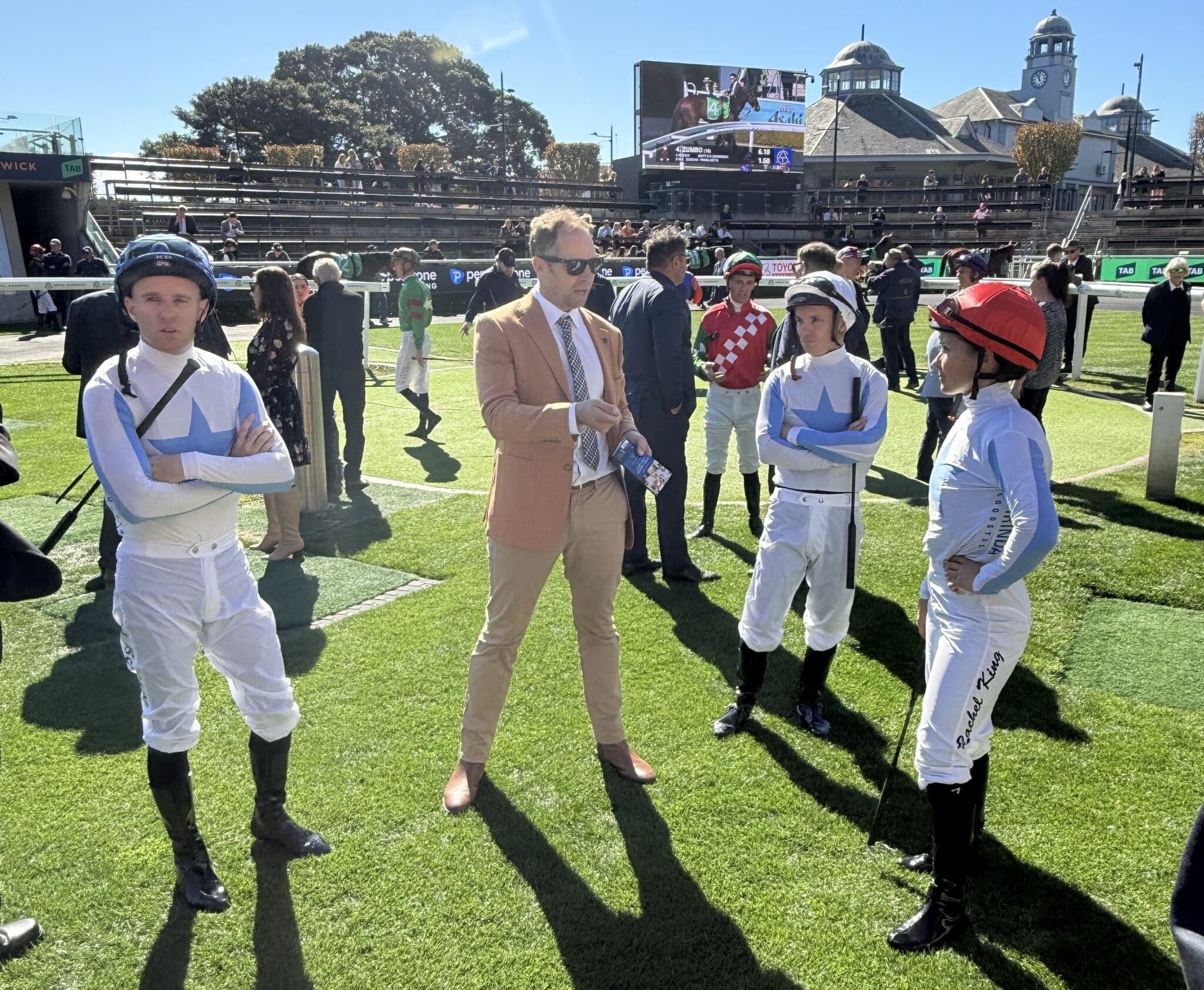
Steve 0:00 Stephen Sean here from Kurrinda Bloodstock and we are joined by Richard Freedman. Hi guys. Hey mate, how are you? Great to be here. Beautiful part of the world up here. It is. So we're here at Morgan Estate. The context of meeting here, we've owned our horse farm a couple of k's up the road here for about four years and Richard, you recently copied us. Yes. I saw how good it looked and I thought I could do that. So I'm just over there. Like literally 500 metres as the crow flies.
Richard Freedman 0:30 And you've trained horses for Andrew Morgan for a number of years. Yeah. Yeah. We're friends and he's been an owner in the stable as well. The restaurant here is fantastic. You've got to eat here. It's brilliant. And his wine's good too, which is good because he's a winery. Yeah. He just walked us around like I know nothing about wine and I don't begin to try to, but I just learnt a hell of a lot. It was great, wasn't it? So more than 20 years ago, I was on the school bus, all my mates listening to Triple J. And I was listening to the big sports breakfast. Oh, were you? You were the one. I knew there was one out there that was listening to us. That is nearly 20 years ago. I think I left there in 2007.
Steve 1:11 And are you still in touch with TK?
Richard Freedman 1:13 He's one of my best mates. We'd go on holiday together. He was one of my best mates before we'd worked together and he survived working with me. And then we've remained mates. It's quite amazing.
1:26 Partnering on a Written Tycoon colt
Steve 1:26 Brilliant. And we had a great time with you up at Magic Millions a few weeks ago. And we're now partners. We've come away with lot 144, which is a written tycoon cult out of Always In The Money.
Richard Freedman 1:38 He's a cracking tight back cult. He looks like his father. You know, he's spitting in there, Joe. Yeah. He's the same colour as his father. He's got the markings, very similar. And he's a big sort of lengthy sprinter, which his father was. So, you know, if he's, you know, almost as good as his father, we'll be happy. But we'll be very happy if he's as good and goes on to have a stud career like his father. We'll all be happy. We'll all probably be dead. You guys will be happy. No, he's got a fantastic attitude, Mike. He's already Shane's favourite at the farm, our farm manager. He's just, those good ones have a presence about him, don't they? Yeah, I thought he did. Just everything in the right spot, had the pedigree, had all the right vet reports, you know, he's had the good scope and all of that. It's, he's a good one.
2:32 Other sale purchases and selling the horses
Steve 2:32 And what else did you come away with from the sale?
Richard Freedman 2:35 Tassaut filly, which sold out pretty quickly. We ended up with a Colt by Helio Yumzain. I've got two fillies by Helio Yumzain at the moment. I know a lot of people wouldn't even know that horse's name. But he was a very, very good sprinter in England. And he has been one of the leading, if not the leading first season sire over there. And he's, the horses I've got by him now are lovely. So that's one I haven't completely sold yet. So, you know, he's not an expensive horse. We only paid 100k for him. And, um, not expensive by Magic Millions standards. Let me qualify it that way. But, um, yeah, and a number of others, you know, we got given a few horses so we didn't have to buy them, you know, horses that were passed in. We bought a lovely capitalist Colt after the sale that had been through the sale. So there's a little bit left to sell, but, uh, pretty much, I think we're pretty comfortable after Magic Millions. Sometimes I come away from there thinking, I've got 12 months of misery ahead of me selling these horses. All right. But not busy. Or Will. Or Will. See, that's why I said ahead of me. No, Will's very, very good on the sale. Yeah. He's, uh, he's a good salesman, Will. And, you know, these days as a trainer, you've got to be. Yeah.
3:54 Training in partnership with his son Will
Steve 3:54 And it must be a great thrill for you to be in partnership with your son, Will.
Richard Freedman 3:58 Um, thrill. That's an interesting word. Well, Will and I, look, it, it, it has its great benefits and its great, um, attraction. And like all family businesses, there's the other side of that too. Because your family never hesitate to tell you what they think in no uncertain terms. And that cuts both ways, I'm sure. But, uh, so we have our moments and, you know, he, he can be. Intensely annoying to me at times. And I'm sure I am to him. But you always know that you're pulling in the same direction and that there will not be anything. You know, you don't, you don't have to worry for a second that not everything is being done. Because he makes sure it is.
Steve 4:44 And he's had a long apprenticeship. He was at Yarramon Park Stud, Greg Bennett Racing, Goodolphin, um, assistant trainer, Friedman Brothers. He was out on his own. So, you know, he's, he's, he's had a long road to get here. Yeah.
Richard Freedman 4:55 We never, we never thought when he was growing up that he would be a racehorse trainer. He had more interest in golf. He is a good golfer. He looks like a golfer. It's a good thing. Be careful. More of a golfer. Be careful of him. All right. If he comes this, well, I haven't got a handicap at the moment and all that sort of thing. Don't play. So he has to go for a friendly game of golf. Yeah. Except he always comes away with the money. I'll tell you stories about that after this. About him fleecing some of our owners. I have to stop, would have stopped at that.
Steve 5:25 We'll get to the Friedman Brothers story. But, I mean, you're all out on your own these days. Yeah. Do you think you train similar to your brothers or is it?
Richard Freedman 5:34 I'm sure we all do similar stuff because, you know, we spent so long together. And we, we only learnt the one way to train horses. You know, we started with six bush horses and we just copied the best trainers we could see. And at the time when we got to Flemington with six bush horses, we just said, well, we'll just copy him and him. And him and him was Bart Cummings and Colin A's. So a little bit of a blend of both of those and a bit of, you know, stuff we picked up along the way on our own. And our styles would be pretty similar.
6:06 Zoo Baby and the three-year-olds in the stable
Steve 6:06 You had Zoo Baby run a good race up at the Magic Millions Carnival. Yeah.
Richard Freedman 6:09 She didn't disgrace herself. Well, look, we were throwing her in the deep end. But we were not sure she'd run the 1,400 metres right out. I'm not sure she did. She looked the winner. She looked like she could be with the winners at about the 200 metre mark. But the last 200, you know, those horses sort of just outstayed her a little bit over the 1,400. But I'm sure when she comes back to three-year-old Billy's company at 1,200, she's definitely stakes class.
Steve 6:36 And who's flying the flag for Freedman training right now?
Richard Freedman 6:38 Right here, the horse or the horse? The horse. Right, I'll tell you about Newcastle this afternoon. Hopefully will. Yeah. Look, we haven't got a star at the moment. We've got an old Coast Watch that goes well, always runs a good race in his grade, which is about listed group three level. But we've got some nice three-year-olds coming along. Pleasure Artist ran fifth in the Spring Champions stakes and then fifth in the VRC Oaks after running a placing in the, I think it was the Ming Dynasty or one of those named after a very good horse, you know. So I think she can go on with the job and be a stakes class filly. I like a filly called Horizons. Yep. Who is an autumn sun filly and will just be coming into her own this autumn, I think. She only won a maiden, but she looks like she can go on with the job. Pocketing the horse for Yulong, he just keeps going through the grades and every time we ask him to do something, he lifts. So I think he's a little better than he looks. So there's a nice level of three-year-olds. One of them has got to put their hand up to be a group one horse. We couldn't tell which one it would be at the moment.
7:46 Growing up in Yass and the school bus
Steve 7:46 I always associated Friedman Brothers with Melbourne, but actually you grew up in Yass. Yeah. Yass.
Richard Freedman 7:54 It was a fun upbringing. I used to catch the school bus from Yass to Canberra to go to school. And that's a, for me, it was nearly a two-hour bus ride on the same bus with the same kids, with the same driver every single school day. And on that bus were the Friedman Brothers, Darren Beedman, Greg Bennett, and a variety of other people. Katrina Hodgkinson, she ended up a minister in the state government. And from this rag-tag bunch of kids who used to do nothing else but gamble in the back of the school bus. We'd be playing cards for money. That's where Darren learned how to be such a little sharp ***. And you know how he ended up so tough? We relentlessly bullied him for about five years. Oh, ***. We put him… One day, we got Darren. We put him… We tied him by his tie and his shoelaces into the luggage rack and left him there. He took the whole trip there, screaming out. Everyone ignored him. Bus driver couldn't hear him. Anyway. So he squared us up for that. And then about four days later, we used to get off the bus at a little place called Hall, which had a general store at the time. And we'd all go in by lollies, the bus drivers. We'd all go in, off the bus, empty the boat, back on the bus, back to Yas. And Darren always, because he's tiny, got pushed to the back of the line. And Anthony Friedman was getting on the bus. The bus driver, Johnny, said, Anthony, they all on? And he looked back and he saw Darren still standing at the counter. And he said, yep. So Darren's about 12. We left him at the general store in this one-horse town. And as we're rolling along the highway, the bus driver said, where's Darren? He said, oh, we don't know. And he said, there was a big blue one. Next minute, there's a car passing us. He's hitchhiked. And he's giving us the bird, right, as he's going past. So we're claiming a bit of, you know, input into how tough he was as a rider. He could really ride. He could always ride.
9:58 A racing family and the first horse
Steve 9:58 Before the inception of Friedman Brothers, you do have a rich family history. With horse racing.
Richard Freedman 10:05 Yeah, my great-grandfather probably started that. He was a jockey back in the early 1900s. He rode three Melbourne Cup winners. Comedy Court. No, Comedy King, West Court. And one other that escapes me. So he, you know, he started off the racing thing. And then my great-uncle was apprenticed in England to some famous trainers over there and was one of the leading apprentices in England. Came back here and trained. Trained horse and ran second in the Melbourne Cup. And then, you know, my father wanted to be a racehorse trainer, but his father didn't think it was a real job, which at the time probably was true. But, you know, we ended up on the horse stud after a sort of a gypsy journey through my father being a builder and developer, then a professional fisherman. And then back to being a builder developer and then being a professional thoroughbred breeder. So, you know, we just thought, well, we had a very long and old story, which I won't tell you, about our first horse. We flummed it. We got left on our property. So we decided Lee, Anthony and I would train it. Anyway.
Steve 11:16 And that was sitting bull.
Richard Freedman 11:17 Yeah, it's a long story. Everyone's heard it. But that got us. We just thought, oh, we'll just be racehorse trainers now. It's easy. You just line them up and they win. You bet, you win. It's too easy.
11:30 Starting at Warwick Farm and moving to Flemington
Steve 11:30 So you started Warwick Farm. Couldn't get in at Randwick. Yeah. Down to Flemington. Yeah. What was your primary role or what sort of roles did you play in the business over those sort of early years?
Richard Freedman 11:41 Well, we're basically all just strappers, you know, because we did all the work. We couldn't afford to employ people. Not for a long time anyway. We arrived in Melbourne. Silly story. This one I can tell. We knew we were going to starve at Warwick Farm. We rang up the AJC and said, we want to train it around. And they said, who? What's your name? Well, all right. Get on the end of the queue. The queue was from here to the front gate long. So anyway, we thought, got to go somewhere better than here. At the time. You know, Warwick Farm's good now, but then not so good. And we just happened to be friends. The lady who taught me English was married to Sir Brian Murray, who ended up Sir Brian Murray Governor of Victoria. And he was governor at the time when we were thinking about all this. He said, don't tell anyone I told you this, but there's a little known bylaw that says if you buy a racing stable adjacent to Flemington Racecourse, you have the right to train your horses on the track. And he said, they wouldn't even know it at the VRC. But I didn't tell you that. So anyway, we lob, we buy, with our winnings from Sitting Bull and other money, we buy a little stable for six horses just adjacent to the track on Fisher Parade. And we go and see Ron King, the manager of the Flemington Race Track. Richard Friedman, Lee Friedman, Ron King, nice to meet you. Yes, what can I do for you boys? We'd like to train on the track. And he said, oh, really? Where are you now? We said, Fisher Parade. I said, right across the road. We want to train on the track. He said, oh, look, there's a long waiting list here. We said, yeah, I know that. But, Mr King, did you know that if we buy, you know, I'm telling the story. And he's looked sort of aghast at us and gone, hmm. Well, nice to see you. I'll get back to you. Just, you know, you had to come. Anyway, apparently, 25 years later, someone who was on the committee told us, said, yes, Ron came in and said, these blokes have said this. And a lawyer who was on the VRC committee at the time said, they're right. And they said, well, how are we going to handle this? It'll be a land rush, right? They said, just let them on the course. They've got six horses. They're nobodies from nowhere. They'll be gone in six months. The rest is history.
14:05 Super Impose and the 1992 Cox Plate
Steve 14:05 And something like 140-odd Group 1 winners. If I can touch on a couple of those very nostalgic horses, old superimpose.
Richard Freedman 14:15 Ah, superstar. We tried to sell him when he was three. Who is it? He just wasn't performing the way we thought. And, you know, he could have been sold to Hong Kong. And I think he might have failed a bit. Because he did bow both his tendons as a two-year-old. So they might have, you know, picked that up. Anyway, he didn't get sold. One day, Darren Gouchy rode him and missed a start on him in a midweek at Flemington. And he rocketed home. I think he got beaten on the day, but he was rocking home. So we started riding him that way. And then he just went on to win nine Group 1s. And, you know, a Cox played at the age of eight. He was a freak.
Steve 14:53 And that 92 Cox play, that was one of the best, you know, in terms of the field. Yeah, it was great.
Richard Freedman 14:58 I used to be able to remember all the horses that were in it. But it was a who's who. And it would just have been nice if Palace Rain hadn't won. Because he fell in front of naturalism and brought naturalism down. Naturalism at the time probably could have pulled a cart and beaten super. As good as super was, naturalism had links on him at that stage. So he would have won. So when naturalism hits the deck at the 800-metre mark, we would go, oh, it's all over. This is terrible. And lo and behold, the old bloke just pulled one out of the fire and won. For our listeners, mate, the difference between an elite horse like that and an average, say, an average provincial horse, what's your opinion? To a trainer, they forgive a lot of your sins. They survive things and thrive when you don't expect them to. They can have a slight injury. And provided they get to the starting gate, they forget about it. You know, they just push through pain. And that's the difference between those champions and just nice horses. You know, the champions push through pain. They win when you don't expect them to win. And there's just some – they've just got something to do with their heart, lung, their motor is just huge. The constitution and their attitude, which is, you know, I just do my best. And, you know, I just want to win. And, you know, it's rare.
16:29 Naturalism, Schillaci and Mannerism
Steve 16:29 You mentioned naturalism. I believe he's one of your personal favourites.
Richard Freedman 16:32 Yeah, he's probably my favourite horse ever. I'm hoping I find one that's even better than him. But he never won the race he should have. We were probably a little bit gung-ho on him. The year he went to Japan and only got beaten that far in the Japan Cup, he probably shouldn't have gone. And I think it did affect him. So he only won, like, three group ones. But I kind of think, in hindsight, we might have managed him differently. He might have won ten group ones. You know, he's just a freaking horse.
Steve 17:03 Scalacci, lovely big grey, I think eight group ones, Prince.
Richard Freedman 17:06 Yeah, he won on that day that Super won the Cox Plate. He won the Moyer that day. It was the only dry day of that whole spring. Some day. Yeah. And the only two horses we hadn't worked that couldn't handle a wet track were those two. And they both won on that day. Yeah, once again, he pushed through a lot of pain, that horse. He had bad feet. He was a big, heavy horse. And for the last two years of his racing career, he was pushing through pain and still winning group ones.
Steve 17:34 Mannerism, 92 Caulfield Cup amongst others.
Richard Freedman 17:39 Very exciting, you know. Beating Shane, who still to this day maintains that it was a brilliant ride. I thought Damien's was marginally better. But, yeah, look, she's a great mare. She ran in that Cox Plate too. So that was a bit of a golden era. That 92 year, we won Melbourne Cup, Cox Plate, the Golden Slipper, and the Caulfield Cup with four different horses. So it was a big year.
18:07 Richard's views on New South Wales racing
Steve 18:07 Caulfield Cup day, to me, now feels like Everest day. We're in the mounting ring for Everest. Oh, it's just insane. You're obviously based up here in New South Wales. What's your thoughts on what's happening with New South Wales racing, all the prize money?
Richard Freedman 18:21 I think it's great. You know, I think it's fantastic. I'm never going to argue against, you know, big prize money and, you know, great races. I would distribute that prize money a little differently. I think, you know, and I've had this discussion multiple times, and Peter knows my view. I don't necessarily think he agrees with it, but that's okay. I would be punching more of that prize money down into the lower grades of races, maidens, class ones, because for most people, that's their horse. You know, putting massive amounts on top of only a very few races, that's giving more money to fewer people. I'd rather be giving that money to more people. And to do that, I think you've got to spread it down the lower grades. But having said that, they are doing that now with the super maidens and things like that. I would just go for it.
Steve 19:15 And I had lots more horses listed. Mahogany, Sub-Zero, Doremus, Binmas Gay, Dan Zero, Flying Spur, all amazing horses, obviously. Don't need to brag, man.
Richard Freedman 19:26 A long time ago, though. I'd like one of them now.
19:30 Makybe Diva and her third Melbourne Cup
Steve 19:30 But Maccabi Diva, I think I backed it every Group 1 except for the third Melbourne Cup, when it just broke every record.
Richard Freedman 19:36 Freakazoid. She was just freaky. You know, I'll never forget that Cox Plate I was watching. I wasn't actually, I wasn't working at Mark Dell at that time. I'd come to Sydney to work on the radio. But I was watching that Cox Plate. And this is the start before she won her third and final Melbourne Cup. That was a lead-up race. She, you know how they all spread across the track at about the 600. They're all trying to get into the mix, you know, out there, so they can get around that corner and be in the mix. She, she had, Bossy had to push her into a gap. She was going to miss a gap, you know, that she needed to get in. He had to push her into it. And I thought, oh, he's had to push her a bit early into that gap. And then she got back on the bit. They're all off the bit inside her and outside her. And she got back on the bit and I thought, oh, it's the end of them. You know, she just cruised in. And then went and won a third Melbourne Cup. Oh, ah. You don't find horses with a heart lung like that, you know. She didn't have to be trained much harder than any other normal stayer. She's about the same. But she's had this huge motor that just kicked in with about 400 metres to run. And, you know, while the others are all gasping, she's just getting into it.
20:53 Radio and Dead Set Legends
Steve 20:53 Away from racing but connected, you've had a long career in media. Yeah. Are your breakfast radio days over?
Richard Freedman 21:01 I hope so. Actually, I'm sure of it. I've been doing a bit of radio with Triple M. Not sure that's going to continue. I haven't heard from them. I know it's killing season when they kill off all the shows. But it'd be nice if they gave me a call and said, your show's dead. They just left me. So we might have to take that show somewhere else. The Deadset Legends has been going for 16 years. And they, I don't know, might be on. I don't know. I'll find out eventually. Probably about two days before it goes to air for the next year, they might tell us.
Steve 21:38 Well, that's a lot of fun. Thank you so much, Richard. Really good to spend time with you. Thank you.
This transcript was generated automatically and may contain errors. The full text is in the page HTML on load.


