
EPISODE 18 · Off “N” Racing
Julian King on Sports Radio, Lonhro and the Cox Plate
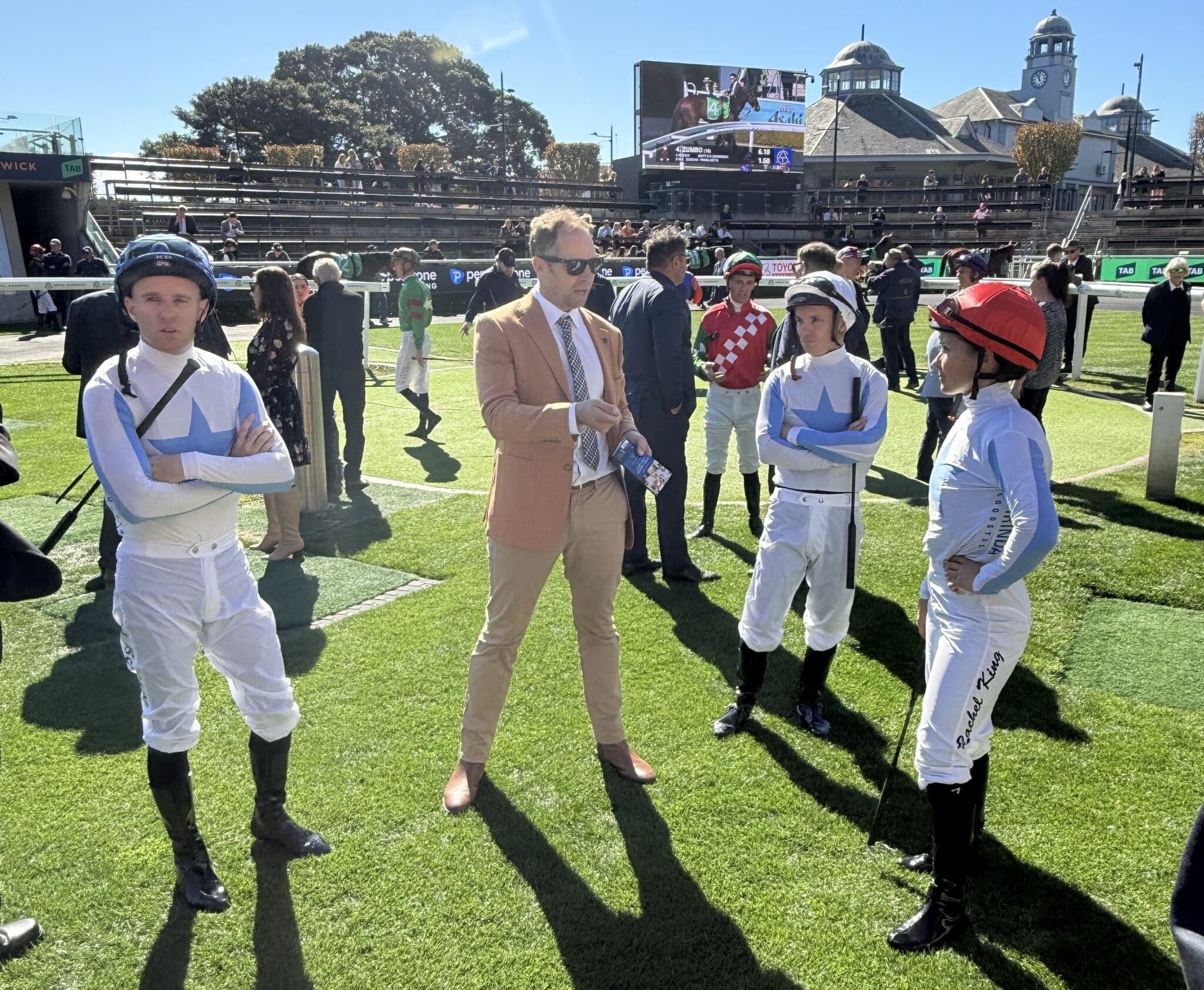
Sports broadcaster Julian King talks radio, his love of Lonhro and why the Cox Plate is the race he would choose to win, recorded the day before Everest Day.
20 November 2024 | 23 min | Julian King
Episode 18
Julian King on Sports Radio, Lonhro and the Cox Plate
Also listen to this podcast on
TL;DR
Key takeaways
- Radio began at the panel. Julian says he started at 2GB pressing buttons as a panel operator in his early thirties, then moved into producing and on-air work
- Kerry O'Keefe opened the door. He says he owes his career to Kerry O'Keefe, who asked him to throw to the breaks, after which he became much more involved in the program almost as a co-host
- No editorial interference. Julian says nobody at SEN or 2GB told him what to say, which he believes keeps his radio work authentic
- Lonhro was the horse he loved. He says he admired many horses but Lonhro was the only one he genuinely loved, and that following him felt like supporting a sports team
- The Cox Plate is his race. If he owned a horse, Julian would choose to win the Cox Plate, and he calls Moonee Valley the home of the race
Jump to
In this episode
“What I love, firstly, it's not a real job because you get paid to just gibber about sport.”
Transcript
Full transcript
Read along or read instead of listening. Helpful if you are deaf or hard of hearing. Select a time to see where it sits on the player.
Julian King guestSean Driver hostSteve host
0:00 Julian King and the Wally Lewis autograph
Sean 0:00 Episode 18 of Off N Racing, Sean and I here with not Rachel King, not Stephen King, but the real King Julian King.
Julian King 0:10 I think it's those two in a distant third. Hey boys, good to see you.
Sean 0:13 Thank you for coming mate. I think there's a true story there. How old were you? What do you recall about getting Wally Lewis's autograph?
Julian King 0:20 Wally. You know, I was working in Chatswood Chase at the time at a retail store called Timberland and they're doing this promotion for Nicotine Patch. Nicotine Patches. And Tanya's eye out of from, remember that show Who Dares Wins with Mike Whitney? Yep. She was there in Wally and now it's, you know, we used to smoke and now we're kicking the habit. And I said, it's Wally Lewis. My mate couldn't give her rats about rugby league. He said, mate, it's Wally. And he was a smoker at the time. He said, give me a ciggy. So I walk up to Wally and I say, well, good to meet you mate Julian King. Oh, I get a menu. I said, do you want to go have a quick dive? I didn't smoke, but I would have done it for Wally. And he goes, oh, mate, I'd love to, mate, but I can't. I've got to promote these. He said, oh, fair enough, fair enough. I said, well, you're genuinely a smoker. And he goes, oh, yes. You know, and then every second it was an F bomb. But it just sounded genuine coming from his mouth. Like this is how he normally talks. And he goes, I started effing smoking out of sheer effing boredom. I drive four effing hours to effing training every day. It was F all on the effing radius. I thought, eff it, I'll just start effing smoking. It's bang, bang, bang. It's nonstop. And then I go for Queensland and Origin. We got onto that and the rest of it. And afterwards they were signing those little sort of comp cards that they have. So Wally, you know, side saddle in the Channel 9 jacket. And I said, look, my last name's King. Would you do me the honour, Wally, of writing to Julian, the real King, Wally Lewis. And he did it. To this day I've got it in a frame at home. Probably my most prized piece of sporting memorabilia. And I've got to work a bit with Wally just through my radio career since then. Wouldn't mean to love you the guy. Always accessible. Just very generous with his time, Wally. Yeah.
Sean 2:00 And if that's your most prized autograph, are there a couple of others that come to mind from your childhood?
Julian King 2:06 Got a Radman plaque. That was a 21st birthday present. I've got a lot of stuff over the years. I don't know. It's, I'm getting Buddhist. Maybe I don't treasure these things as much these days. Plus in my line of work you get to meet a lot of, I don't say my heroes, heroes but people that you sort of looked up to day in, day out. And, you know, it seems uncool. If I go up to Ian Chapman, can you just sign this for me, mate?
2:27 From a social science degree to radio
Sean 2:27 So, yeah. And how does someone who studies a Bachelor of Social Science end up in a career of sports broadcasting?
Julian King 2:34 Good question. I don't know. I'm a case study for that. I did it, you know, I did a sociology major. I didn't know what I wanted to do. The thing about it is that I'd always loved radio, but I'd never considered it as a genuine career option. For me, it's always, oh, these guys are masters of what they do. I couldn't possibly do that. I didn't get into the industry until my early 30s. And even then, my girlfriend at the time, now wife, Mel, her second cousin was working at 2GB at the time. Rugby League fans, you know, you boys remember a footy player called David Penner? Yeah. To be halfback for the Eels and for the Bunnies? Yeah. So David's my wife's second cousin. And he was working in the sales department at 2GB. And so through David, I got a sit-down meeting with the program director, nothing more than a five, ten-minute chat. He said, let's get you in, teach you how to press the buttons and be a panel operator. So I did that for a month or so. And then next thing I know, I'm doing mid-dawns with Frank Crook, God bless him, the late Frank Crook. And then they threw me on the weekends for the summer continuous call. And I thought, this is like heaven. So I'm here pressing buttons and there's Blocker and there's Daryl Brougham. And on Saturday, it was Andrew Moore and Sunday, Mark Braybrook. I listen to these guys. I watch these guys. And now working with them and Blocker mentioned my name on air. And Andrew Moore would always sign off by thanking everyone on the team, including the panel operator. And I was in heaven. This was, I said, this is where I need to be.
Sean 3:57 And some of those personalities you've just mentioned, you know, big man, et cetera. Continuous call team. I think you worked on the Gus Gould show, a whole list of shows in that 2GB career.
4:11 Producing, the Kerry O'Keefe Show and on-air roles
Julian King 4:11 Yeah. So what happened was I, from panel operator, went to show producers. So I worked with the summer continuous call team as a producer. And then they brought the great Skull, Kerry O'Keefe, on board. I said, I've got to work with Skull. So Skull had done a show with my SEN colleague, Jimmy Smith, for one year. Second year, Jimmy didn't come back and they wanted Skull to take more of a hands on role. You know, he's going to anchor the show. They're going to rebrand the name, The Kerry O'Keefe Show. And I said, okay. So I worked with Skull. And Kerry says to me, look, Jules, would you mind just sort of throwing to the break for us, sort of get us in and out? Like they do on it. You know, all the sort of the nondescript, absent kind of FM job. Yeah, Kyle and Jackie. And then you hear their voice. You don't really know who they are. They literally just, that's what I thought my role was. I said, sure, Skull, whatever you want. So I'm sitting there, first show, Skull does his intro and then brings me in and Jules is with me. And I wasn't expecting to chat. And I'm nervous and I'm talking at this rapid fire rate. And then from that point on, I got a lot more involved in the program almost as a co-host. So I had no great ambitions at that point in time to be on air. I thought that would be nice. But some people would, you know, climb over dead bodies to get that position. I wasn't one of those. But it just kind of fell that way. So I basically owe my career to Skull giving me the opportunity to do that. Because at the end of that season, they go, oh, no, Jules, I didn't know you did that sort of someone we can consider from there. And from there, it just grew all the on-air roles. So I did politics, a lot of lifestyle stuff, a lot of summer filling work. And then when they rebranded TUE to Macquarie Sports Radio, they go, okay, you like your sport. Night show is all yours. Yeah. So from there, you learn the night show. And then from that point to where I worked with people like Gus Gould. And then they had the cricket rights, so I got to call cricket, you know, with Ian Chappell and Darren Lehman and Jeff Lawson and Tubby and Alex Blackwell and Trent Copeland. All these great names, great names.
6:08 What Julian enjoys about working at SEN
Sean 6:08 Brilliant. And I've really enjoyed listening to you on SEN for three plus years. You're the one. Thanks, Diggas. Appreciate it. What do you enjoy about working at SEN?
Julian King 6:20 What I love, firstly, it's not a real job because you get paid to just gibber about sport. Or, you know, we'd sit around the pub and just, you know, oh, this guy's got to open the batting field. Nah, nah, nah. He's the best halfback. Nah, he's not better than Thursd or whatever. You get paid to do that sort of stuff. And what I've loved about SEN and GB were the same is that there was never any editorial interference. Nobody said, oh, don't talk about this. They don't tell you what to do. They don't tell you what to say. And so there's an element of authenticity to it. Just be you. And if people like what you have to offer, they'll ring up. They'll write in. They'll come back. They'll say, hey, good to hear you on air again. And so you've got to kind of trust yourself just to do what you do. And so in that respect, I'm really lucky that nobody interferes with telling you how to present your program. Yeah, it's, it's, again, even thinking about it now, I said, how good is this? I mean, I can rock up to work in shorts and thongs as you two steam gentlemen do and flick on the microphone. But the other thing is that it's a real community. And what I love about radio, it's intimate, it's immediate, it's engaging. You know, there's people that I've never met in my entire life that you almost become surrogate friends with just through that medium.
7:35 A memorable interview with Greg Chappell
Sean 7:35 And who's a recent, a memorable, or even in the past, a memorable? Best interview you've ever done. Yeah.
Julian King 7:44 Best interview.
Sean 7:45 What do you think the best one is you've ever done?
Julian King 7:47 I don't know if it's the best, but the Chorus Sports Radio. So I used to get Greg Chappell on annually. Greg Chappell does a lot of great work through the Chappell Foundation raising funds for youth homelessness. And I was interviewing Gregory Stephen. And he talked a bit about his cricket career and the work that he does. And I had a regular listener who rang afterwards. And he starts crying. And he says, Jules, thank you for that interview with Greg Chappell. He was my idol growing up. I had a great nickels back like he did. I've also been homeless. It's degrading. It's demeaning. And it means the world to me. I'm back on my feet that people like my idol Greg Chappell actually think about people that were suffering the plight that I was suffering. I thought, OK, this is the connection that it makes. You don't know who's out there listening. You don't know what impact you say or what your interviewee may say that can have on a listener. And it's in this case, it was really profound. And it was really moving. I thought, OK, I've sort of through Greg and through this particular person who I don't know, but would ring up every night, made a connection, made him feel good about himself, made him feel like he's acknowledged as a person.
8:58 First racing memories and Derby Day 1992
Sean 8:58 Brilliant. And as you know, we own and race horses, not horses. Professionally, what's your exposure to horse racing been?
Julian King 9:07 Oh, a lot of bad tips, as I can tell you.
Sean 9:12 A lot of good ones, too.
Julian King 9:13 But it's throwing a dart, isn't it? The earliest memory?
Sean 9:17 The earliest memory, yeah.
Julian King 9:18 I can tell you, back at school we used to get into the punt and we'd go to, I won't know the suburb of the TA, but in our school uniform we knew which tellers would take our 50% bets. Oh, sorry, 50 cent bets. And we'd go and get a little pencil in the market off and we really got into it. And so if you could get from 50 cents a two buck return, and we're talking early 90s, they'd get you a couple of lollies or whatever. It was beautiful. You know, fantastic. You don't go break backing winners, as they say, or place getters, as the case may be. 1992, my first exposure on the track. So my stepdad, late stepdad, John took me to Royal Randwick Derby Day. Pulls out a water cash and he loved to punt, right? So he had his own business and he played backgammon and he took these opponents to the cleaners. What a cash. Let's go to the track. I'm a young teen. So we go there. Derby walks up to the bookie. 200 on the nose of the end of the cross. And as a kid, oh, $200. It loses to naturalism, right? Great rivalry it was. I think R.S. Dyer was on the end of the cross and he was riding a McDip and probably naturalism. And I'm like, I can't believe you lost 200 bucks. No worries, I took it off some bum and backgammon, that's fine. So here's 50 bucks. Go and enjoy yourself. Meet you back here in a couple of hours. And I didn't want to punt. I was like, 50 bucks? Like that is a fortune to a young teen in the early 90s. So I got a bookie, two bucks to it. They didn't care that you were young. They could see that you're underage. They'll take your money. So I grabbed the pie and the coke and pocketed the change. Had a great time. And I thought, okay, naturalism, good horse. The end of the cross, good horse. And then at school, 1992 Cox Plate. They call it the greatest Cox Plate field ever assembled. Naturalism, Led Solo, the Japan Cup winner, Michael Glaser, better loosen up, rough habit. And so a mate of mine reached a formal ticket, 40 bucks, right? Because naturalism, great horse, can't lose. Loads up 40 on the nose of naturalism. What happens?
Sean 11:15 Falls.
Julian King 11:16 Falls out of the race. Watching, thinking, oh, Reggie, we're not going to see you at the formal. You're going to have to tell your partner, sorry, love.
Sean 11:23 I can't take you.
Julian King 11:24 Why? Because I blew it on a horse which fell in the W.S. Cox Plate. And my lasting memory, my first memory was, oh, Reggie, you poor ***. And after that, I just remember Kenny Callender there because Superimpose wanted to say, the mighty Shoopa Dooper.
Sean 11:37 Kenny Callender.
Julian King 11:39 That was very funny. But it's a lottery, isn't it? It's funding.
11:44 Lonhro, the horse Julian loved
Sean 11:44 It is. Superimpose, another very popular horse. We were at Epsom Day a few weeks ago. One of our owners, Craig, who would be watching this, that's his favourite horse. Having listened to you for a number of years, Jules, I think we share the same horse. Lonro.
Julian King 12:01 Yeah. The best. You know, when Biedman once came into GB, I think for a racing show Saturday morning, my former colleague Mark Levy was hosting.
Sean 12:09 He just come to meet Darren.
Julian King 12:10 He got to know Mitchell really well too and sat down with Darren. And I got him to, I went to the colour print, printed out Lonro. I think it was a photo of Lonro, when Lonro took down Sunline in the Caulfield Stakes, I think it was called the Yalumba back then.
Sean 12:27 And he said, I remember that.
Julian King 12:28 And Biedman said to me, best horse I've ever ridden. You know, they called it the push button horse. I was at George Main Stakes Day 2003 because I just, it's the only horse I've ever fallen in love with. I've admired a lot of horses. I saw the Diva run the O3 Melbourne Cup. Yeah. I love Fields of Omar. You know, Grant, I mean, he was a great horse, but a rival to Lonro. You know, Sunline, Northerly, that era. Admired them all, but it was the only horse that I loved, like genuinely loved, at the point where, you know, horse racing is built around punting and making money. But for me, it was like backing a sports team. It wasn't about the punt. It was just, I actually felt profound disappointment when Lonro lost. And the only blot in the copy book was never getting the Cox Plate, you know, slipping on the turn, finish third. That's an African thing. Pace said, I don't know what I was doing there. But George Main Stakes Day, and I saw this thing. And Cassidy was on Grand Army and said after the race in Lonro, I go, phew, Grand Army, hell of a horse. And we were there last day, Queen Elizabeth Stakes, turned the tables, but said, I got windburn from that horse. Doesn't touch the whip, never touched the whip. It came motoring home. Muncie was, Guy Walter, Defyre second, I think Gay's horse came third on. Incredible. Just to see this thing in the flesh run. And a beautiful colour as well. Just like, oh, can you just say, the gorgeous, really dark brown.
13:53 Sean on Carael Boy running third to Lonhro
Sean 13:53 Well, fortunately, he's my favourite. Well, fortunately, you probably remember a horse, Carill Boy. Yeah. We ran third to Lonro three times. We've still got him now. He's 28 years old. And we beat Grand Army before she came out and won the group one. We beat him in a group two, and then we beat Defyre. So we were racing in those races with Carill Boy. It's a lead company. And he gave us a gallop. When I say come third, like got beat four lengths third. So he gave us a gallop in less than third. It was just when I saw the horse, when you saw him in the flesh, you can't explain how beautiful he was. Like we had a horse in the race and I was with my pop and I'm like, hey, this horse. Because you could see your face through his coat. Gorgeous. Just this black, beautiful animal. Like it was, you can't describe, he was just beautiful, wasn't he? Yeah. But could never win a cocksplate. That's the…
Julian King 14:49 Well, let's have the Australia Cup though. Was it the Hornsby Tab win that? Best race I've ever seen. Oh, man. And what a feel. I think the Deeb was in that feel. Just to be boxed in to come out. And I always loved that Hawksy style of running. You know, just to come from the back and come charging home. And the long reins.
Sean 15:05 Even with the long reins.
Julian King 15:06 Yeah, incredible.
15:07 The race Julian would love to win
Sean 15:07 If you were to own a horse, what's the race that you'd love to win?
Julian King 15:11 Cocksplate. You know, with respect… Look, Melbourne Cup has prestige. I don't feel connected to it much anymore. And I think a lot of Australians are like that. And maybe it's me just getting older, but I don't get a sense of the form. Because we just don't have stayers here anymore. A lot of overseas horses, which is great. I think it enriches the spring. But for me, and I think most people, I'm sure you boys have agree, that's the premier racing event.
Sean 15:37 Wait for age.
Julian King 15:38 Wait for age.
Sean 15:39 It's the best.
Julian King 15:40 2040. Moonee Valley, special track, tight turn, rise, short, straight.
15:43 Moonee Valley closing and the Cox Plate
Sean 15:43 Correct me, but you probably know more than me. So does that go to Caulfield next year for one year? The Cox Plate? Moonee Valley shut down.
Julian King 15:50 Oh, that's a good question, actually.
Sean 15:52 I read it last night. Yeah. So they're shutting down for Renaults, but they're saying if it's a success… No.
Julian King 15:58 That'd be a travesty, right?
Sean 15:59 No. If it's a success, because as we know, turnover. Yeah. They might keep it. Right? But yeah, it's got to go back to the valley, right? Like it has to.
Julian King 16:10 It's a spiritual home, right? Yeah. And what is a sport without traditions? You know? Absolutely. And I know the Everest is sort of new and it's got Groupon staff. It's building its own tradition, but Moonee Valley is the home of the Cox Plate.
Sean 16:21 And the best horse is still in. Like people say it's on pace by, it's like Romantic Warrior, huge. Yeah. Animo, huge. They still can come from behind. Yeah.
Julian King 16:31 I remember being on Viscount when it got squeezed by Sunline and Northerly that year, and it was the longest protest. And I jumped on the train, got off at Windy Dunst, going to the local tour. Still no result. And I ended up losing. But anyway, it was a great race.
16:47 Everest Day and racing stories
Sean 16:47 We'll publish this in a few weeks, but tomorrow is Everest Day. And how do you do the form, Jules?
Julian King 16:56 I ring up my tips to mates and aggregate who they tip. It's really difficult, isn't it? I generally defer to those that are more in the know. Sometimes I'm still one of those that go the omen. But I remember a former mentor of mine, the late great David Morrow, amazing sports broadcaster. And we'd be doing the footy on Friday nights. I said, Dave, what are you going to do when you finish going home? He goes, oh, I'm just going to finish my spreadsheet with my tips for tomorrow. And he always talked up the ones he won. He never heard about the ones that missed. And that's, you know, that's the norm, isn't it, in punting? They tell me about the great wins. They tell me about the 10 that lost before that. But yeah, I do a little ring around S&N. I've got some really good people on board through S&N track. And so I'll tune in. But yeah, that's kind of what I do.
Sean 17:39 I feel like that Miles Fitznoisse is quite a character.
Julian King 17:42 Miles is a character. I mean, Nick and Ganno do the Sydney set and we've got Chris Nelson. Across the board, some really good tifters. When they all pick different horses in the same race, then you've got a problem. But I try and look for a bit of value. I really go on the nose because I'm not a big enough punter to get return from $1.50 favorites. So then you might look at some kind of multi, for example, yeah.
Sean 18:05 But I'm … Well, as we spoke, like five bucks a place. Yeah. There they go.
Julian King 18:10 And I'm not a big punter. I'm a five-tint-a-lot punter these days. Gone are the days I throw $100, $200 on the nose because, you know, living in Sydney with a couple of kids, I can't afford to take that risk anymore. But, you know, unless I think it's an absolute certainty, like LONRO back in the day, where I'd go big on the nose of LONRO and, you know, lost in a few cocks plates, which saddened me. And, you know, it's funny you talk about cocks plates. I remember we were doing a summer show with the great miracle, Malcolm Johnston, in Kingston Town, you know, three cocks plates. And Dale Roman said, oh, miracle. In Kingston Town, not many jockeys would have won as many cocks plates as you, Malcolm.
Sean 18:47 He goes, plenty. He goes, how many did you win?
Julian King 18:49 One. Because he was always suspended. So he didn't get to ride the king in three consecutive cocks plates.
Sean 18:55 And holds the record. The most suspended jockey in history.
Julian King 18:58 Malcolm, yeah. He wears that as a badge of honour too, very cool.
Sean 19:01 He does. We're up at Wellington, you know, country New South Wales, Wellington.
Julian King 19:05 Yeah, yeah, yeah, of course.
Sean 19:06 He was up there as a guest speaker. Yeah. He's hilarious to this day.
19:10 Race callers and racing characters
Julian King 19:10 They toss up really unique characters racing, really unique characters. And I remember, you know, the great Ian Craig Sydney race call. I've spoken to him and Greg Miles and, you know, and Ian Craig's so old school. And I was doing an interview with him one time at Macquarie Sports and unfailingly polite in his mannerisms and his language. And you'd ring him on the home phone and he said, I'll be on the chair and I'll be next to the phone ready to take your call. And this is Ian Craig. It's this beautiful tone that race callers have. And he had a real old school kind of tone. You know, he had it. And Miles, he had it. And Tappy had it. And back in the day, you know, Bill Collins further back. Kingston Town can't win. And we got great callers now. You know, Darren Flindell and Matty Hill are just world class. And I've got so much respect for people that can call racers. You know, I called a bit of footy, I called cricket. I mean, that is nothing compared to what these guys do. Phenomenal.
20:07 The summer of cricket and Australia's opening spot
Sean 20:07 Yeah. I know you're a huge cricket fan. Yeah. But the summer of cricket coming up, five tests. Our best rival, India and England. But five tests against India. Cam Green out for six months now. Yeah. Big out. What's he out for? Injury?
Julian King 20:27 Had an operation. Yeah. The whole summer, Cam Green.
Sean 20:30 So who are the candidates? Do you put in an all-rounder or do you move Steve Smith down the order?
Julian King 20:35 Well, Steve Smith, after putting his hand up to open, he's put his hand up and said, I don't want to open anymore. So he's moved down back to four. And it's, you know, McDonald Cummins do kind of the thinking, let's just pick our best players. They don't put as high a value on batting position as others would have. I mean, open is a specialist spot. I was warm to the idea of Smith doing it. I'm probably glad now that he's gone back to four. So what does that mean with a retirement of Warner with Green out, who might have been an option? Well, Kawaj has won.
Sean 21:02 Mm-hmm.
Julian King 21:03 Sam Constance got a double for New South Wales in the opening shield game against South Australia. The last to do that was RT Ponting.
Sean 21:10 Mm-hmm.
Julian King 21:11 Possible generational talent, red ball specialist. 19, it'd be a big ask for the kid, but if he keeps churning out the runs, well, he may be too impossible to ignore. Then it really comes down, you look at that Australia A squad, Renshaw not named, so effectively it tells me it's a battle between Bancroft and Harris. Harris got a ton in the first game. Bancroft's run return in the past couple of shield seasons has been unrivaled. Both of them had a taste of test cricket. I'd say they're mature enough now to seize the opportunity with both hands should they be given it again. Now, I genuinely have no idea which way they would go, but I would suggest that those two are ahead of Constance at this stage.
Sean 21:49 Right. I'd go for the young fella.
Julian King 21:51 You'd go for him.
Sean 21:52 Bloody.
Julian King 21:53 Sometimes you've just got to roll the dice, don't you? I mean …
Sean 21:55 What is he, 19? 19, yeah.
Julian King 21:57 And he's not in the New South Wales white ball teams. So he's a …
Sean 22:00 What's his demeanour? Like super confident? Zen-like.
Julian King 22:03 Zen-like.
Sean 22:04 He meditates before his innings.
Julian King 22:05 He meditates before his innings. But he's not a white ball cricketer. A lot of these young guys are … They've died of T20 and one day cricket. So they don't have the techniques for red ball cricket. You know, you've got to withstand spells of bowling, harsh spells of bowling. He's got that technique. And spin for that matter. But again, like, you know, 19, you don't want to damage the kid there. And that's the risk. But sometimes you never know. You know, we've picked players out of nowhere before that have thrived. Neil Harvey was 19. I mean, Warnie had a modest first-class average. Joel being a bowler, they knew he was special. He got hit all around the park at his debut against Inno, won for 200 odd, but they knew he was special.
Sean 22:41 Was Clark young? He would have been …
Julian King 22:43 Clark was young. Yeah. Yeah, a very good player. And they've talked about Constance in the same breath as Clark, you know. Will Bukowski, Michael Clark, Philip Hughes, you know, these young guys that just looked at that cut above the rest of them.
Sean 22:55 Yeah. Well, brilliant, Jules. Thank you so much for joining us, often racing. And download it, yes. Spotify, YouTube, and we just appreciate your time, mate. My pleasure, boys.
Julian King 23:08 Thanks for having me.
Sean 23:09 Thank you.
This transcript was generated automatically and may contain errors. The full text is in the page HTML on load.


